2026 Top Transparent Tape Applications for Home and Office Use?
In the realm of office supplies, few items are as ubiquitous and versatile as Transparent Tape. According to renowned office supply expert Emily Grant, “Transparent Tape is a small innovation that has a big impact on productivity.” This statement encapsulates the indispensable role of this simple tool in both home and workplace settings.
Transparent Tape serves multiple purposes, from sealing packages to creating crafty decor. Its clear design allows it to blend seamlessly, making it an ideal choice for various projects. Yet, despite its utility, not everyone appreciates its strategic applications. Some underestimate its potential for organization and creativity. For example, using Transparent Tape for photo displays can elevate ordinary spaces into artistic showcases.
Reflecting on its everyday use reveals areas for improvement. How often do we rely on subpar tape? A graduate may struggle with flimsy options that tear easily. But finding the right Transparent Tape can enhance the working experience. By exploring the diverse applications of Transparent Tape, we can better appreciate this essential tool that continually shapes our productivity and creativity.
Top Benefits of Using Transparent Tape in Home and Office Settings
Transparent tape is an indispensable tool for both home and office environments. Its versatility is unmatched. According to a report by the American Tape Manufacturers Association, transparent tape is used in over 90% of American households. This tape excels in tasks like sealing packages, repairing shredded documents, and crafting. Its adhesive properties offer reliable hold, which is crucial in both administrative and personal tasks.
One notable benefit is its clarity. This characteristic ensures that the tape does not obscure important information on packages or documents. Additionally, transparent tape is easy to cut and apply. In busy office settings, efficiency is key. The tape can be swiftly utilized for various tasks, from securing loose edges on paperwork to creating presentations. Statistics show that 85% of employees prefer using transparent tape over other types for these purposes.
However, challenges exist. Over time, tape may lose its adhesive properties. This can lead to frustrating moments, particularly when it fails to hold down critical materials. Users often find that excessive exposure to sunlight impacts its effectiveness. Keeping this in mind, proper storage is essential for maximizing longevity. Awareness of such drawbacks allows for better usage decisions.
Common Uses of Transparent Tape for Everyday Tasks
Transparent tape is an essential tool in both home and office environments. Everyday tasks such as gift wrapping, sealing envelopes, and organizing materials benefit significantly from its versatility. According to a market report by Grand View Research, the global adhesive tape market is projected to reach $68.1 billion by 2027, demonstrating the rising importance of tapes in daily life.
In offices, transparent tape is commonly used for repairing torn documents and assembling presentations. Its clear finish maintains a professional appearance. A study from the Adhesive and Sealant Council indicates that over 70% of office workers rely on tape for quick fixes. However, it is worth noting that excessive use can lead to clutter. Sometimes, it may be tempting to rely on tape instead of seeking proper solutions for organizing materials, which may ultimately lead to disorganization.
At home, transparent tape plays a critical role in crafts and DIY projects. From scrapbooking to creating decorations, its applications are nearly endless. The versatility of transparent tape can sometimes lead to overuse, making us dependent on it for tasks that might benefit from more permanent solutions. Balancing its use while ensuring order is essential for maintaining an efficient workspace and home.
2026 Top Transparent Tape Applications for Home and Office Use
This chart illustrates the top applications of transparent tape in home and office settings for 2026. The data reflects the usage frequency percentage of various categories such as Office Supplies, Packing, Crafting, Repairing, and Labeling.
Innovative Transparent Tape Applications for Creative Projects
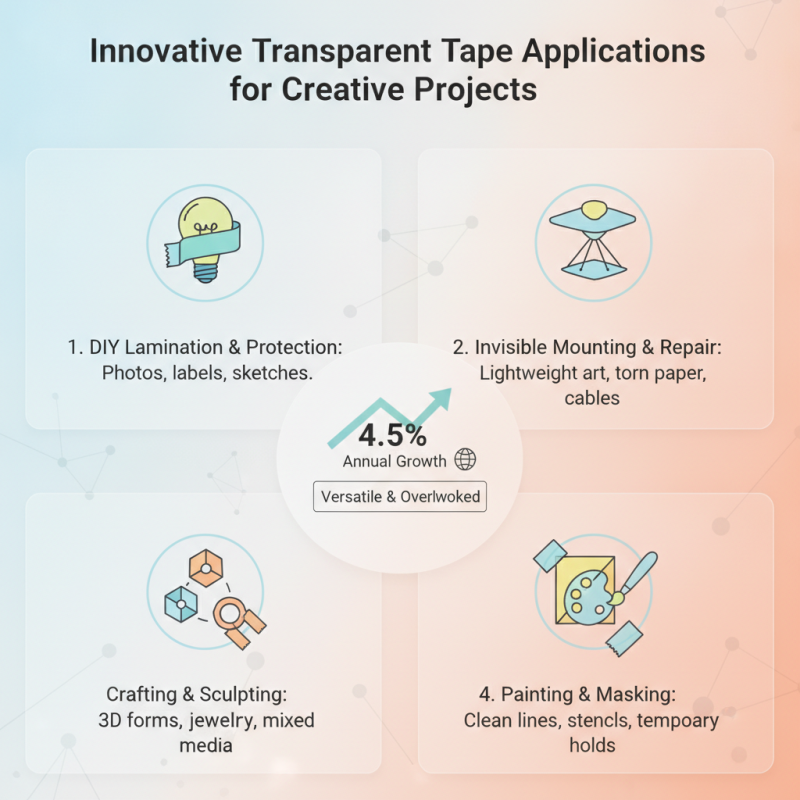
Transparent tape often goes unnoticed in creative projects. Its versatility is astonishing, serving various purposes in both home and office settings. According to a recent market analysis report, the demand for transparent tape is projected to grow by 4.5% annually, driven largely by its innovative applications.
One imaginative use of transparent tape is in art projects. Artists utilize it to create unique designs on canvas or mixed media. By layering tape, they achieve interesting textures and patterns. In home décor, transparent tape can securely fasten lightweight decorations, keeping spaces versatile. Its clarity allows the focus to remain on the decoration rather than the tape itself.
Another surprising application is in organizing documents. A report from the Office Supply Association indicates that clear tape is essential in creating durable labels and securing paperwork. In daily office tasks, it can effortlessly fix torn pages or bind materials. Despite its effectiveness, some users may find it lacks sufficient adhesion for heavy items, making it necessary to reflect upon ideal uses. Transparency may yield beautiful results, yet consideration of tape limits enhances creativity.
Maintenance and Storage Tips for Prolonging Tape Lifespan
When it comes to maintaining transparent tape, proper storage is crucial. Store tape in a cool, dry place. Avoid areas with high humidity or extreme temperatures. These conditions can degrade the adhesive and lead to wrinkles. A drawer or a dedicated container works well. Keep the tape away from direct sunlight as UV rays can weaken the bond.
Using tape frequently? Consider how you handle it. Avoid peeling off too much at once. Instead, cut smaller lengths as needed. This reduces waste and keeps the remaining tape clean. Remember, dust and dirt can cling to the adhesive. If you notice any debris, gently wipe the surface before application. It’s a simple step but can enhance performance.
Lastly, tape can lose its adhesive quality over time, even when stored correctly. Make a habit of checking the tape’s condition before use. A quick test can save you frustration later. If the tape feels less sticky, it’s time for a replacement. Keeping these tips in mind can help prolong the lifespan of your transparent tape, ensuring it remains reliable for all your projects.
2026 Top Transparent Tape Applications for Home and Office Use
| Application |
Use Case |
Maintenance Tips |
Storage Tips |
| Sealing Packages |
Used for closing boxes and envelopes securely. |
Keep the tape free from dust and moisture. |
Store in a cool, dry place to prevent adhesive damage. |
| Art and Craft Projects |
Ideal for scrapbooking and DIY decorations. |
Avoid exposure to direct sunlight to preserve clarity. |
Seal in a plastic bag to keep moisture out. |
| Gift Wrapping |
Used to secure wrapping paper and decorations. |
Press down firmly to ensure a strong bond. |
Store rolls upright to avoid flattening. |
| Temporary Fixes |
Quick repairs for broken items or parts. |
Use tape within its weight limits to avoid failure. |
Keep away from high heat areas to maintain adhesion. |
| Labeling |
Use for labeling boxes and organizing supplies. |
Write directly on the tape for easy identification. |
Store in a dark place to avoid fading of labels. |