2025 How to Choose the Best Hot Melt Carton Sealing Tape for Your Needs
Choosing the right packaging materials is essential for ensuring the safety and integrity of your products during transit. One of the critical components in achieving this is selecting the appropriate adhesive solution, particularly when it comes to sealing cartons. In 2025, the market offers a plethora of options, making the decision-making process more complex. Among these options, the "Hot Melt Carton Sealing Tape" has gained significant attention due to its impressive bonding capabilities and versatility.
When it comes to choosing the best Hot Melt Carton Sealing Tape for your needs, several factors must be considered, including the type of packaging, the weight of the contents, environmental conditions, and application methods. Each of these factors plays a crucial role in determining which tape will provide the optimal performance, resistance to stress, and ease of use. Furthermore, understanding the different styles, adhesive qualities, and sizes available can help you make an informed decision that aligns with your operational requirements.
In this guide, we will explore the key features and considerations that will empower you to select the most suitable Hot Melt Carton Sealing Tape for your business. By focusing on the unique properties and applications of this tape, you can ensure a more effective sealing process, resulting in enhanced product protection and a smoother logistics operation.

Understanding Hot Melt Carton Sealing Tape: A Comprehensive Overview
Hot melt carton sealing tape is essential for ensuring the integrity and security of packaged goods. Understanding its composition is crucial; this adhesive tape typically consists of a polypropylene backing coated with a hot melt adhesive that bonds instantly upon application. This type of tape is favored for its strong adhesion and versatility, making it suitable for various materials, including cardboard and plastic. The thermal properties of hot melt adhesives allow them to remain effective under various environmental conditions, ensuring that packages remain sealed during shipping and handling.
When selecting the right hot melt tape for your needs, it’s important to consider several factors. These include the weight and type of the materials being packaged, the storage conditions, and the machine compatibility if automation is involved. Additionally, consider the tape's thickness, length, and adhesion strength. Choosing a tape designed for your specific application can significantly improve the efficiency of your packaging process and reduce the likelihood of damage during transit. Understanding these elements will help you make an informed decision, tailoring your choice to meet your operational requirements effectively.
Comparison of Hot Melt Carton Sealing Tape Properties
Key Factors to Consider When Choosing Hot Melt Carton Sealing Tape
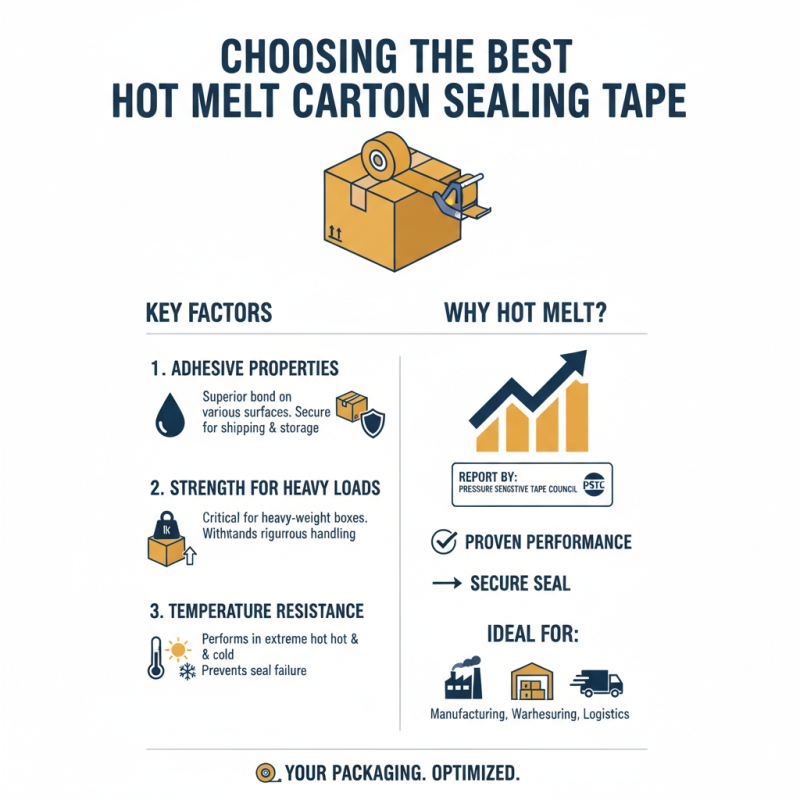
When choosing the best hot melt carton sealing tape, several key factors should be considered to ensure it meets your specific packaging needs. First, assess the adhesive properties of the tape. According to a report by the Pressure Sensitive Tape Council, hot melt adhesives offer superior performance on a variety of surfaces, ensuring a secure seal that withstands the rigors of shipping and storage. This type of tape is particularly effective for heavy-weight boxes, where strength is critical.
Another important factor is the tape's thickness and width. A study published in Packaging Technology and Science indicates that thicker tapes provide better durability in extreme conditions, while wider tapes can cover more surface area, improving sealing efficiency. Always choose a tape width that fits your packaging process to avoid wastage and ensure a quick application.
**Tips:** When selecting your hot melt tape, consider doing a pull test to gauge the tensile strength and adhesive performance. Additionally, investing in a tape dispenser can enhance consistency in application and save time during packaging. This careful selection process can lead to significant efficiency gains in your operation.
Different Types of Hot Melt Adhesives and Their Applications
When selecting the best hot melt carton sealing tape for your needs, understanding the different types of hot melt adhesives and their applications is crucial. Hot melt adhesives are widely utilized in various industries due to their ability to bond quickly and effectively. According to a report by the Adhesive and Sealant Council, the demand for hot melt adhesives is projected to grow at a CAGR of 4.1% from 2023 to 2028, driven by their superior performance in packaging applications.
There are several types of hot melt adhesives to consider. Ethylene-vinyl acetate (EVA) is commonly used for carton sealing due to its excellent adhesion and flexibility. Another option is polypropylene (PP) based adhesives, which offer higher heat resistance and are often preferred for heavy-duty applications. For those looking for eco-friendly solutions, water-based hot melts are gaining popularity, as they have lower VOC emissions and are easier to handle.
**Tips:** When choosing hot melt tape, consider the specific materials being sealed and the storage conditions of the product. Always test a small section before full application to ensure optimal adhesion and performance. Additionally, keep in mind that the tape's width and thickness can impact its sealing strength and durability, so select accordingly based on your packaging needs.
2025 How to Choose the Best Hot Melt Carton Sealing Tape for Your Needs - Different Types of Hot Melt Adhesives and Their Applications
| Adhesive Type |
Temperature Resistance (°C) |
Applications |
Hold Strength (N/cm) |
| Standard Hot Melt |
-20 to 65 |
General carton sealing |
12 |
| High Performance Hot Melt |
-30 to 80 |
Heavy-duty packaging |
20 |
| Cold Temperature Hot Melt |
-40 to 60 |
Freezer and refrigerated packaging |
15 |
| Water-Resistant Hot Melt |
-20 to 70 |
Outdoor and humid environments |
18 |
| Eco-Friendly Hot Melt |
-20 to 65 |
Sustainable packaging |
10 |
Evaluating the Performance of Hot Melt Carton Sealing Tapes
When evaluating the performance of hot melt carton sealing tapes, several key factors come into play, including
adhesion strength,
temperature resistance, and the specific materials used in production.
According to a recent report by the Adhesive and Sealant Council, the demand for high-performance tapes in packaging has surged,
with a projected growth rate of 4.5% annually through 2025.
This trend underscores the importance of choosing a tape that meets the specific requirements of your packaging process.
When assessing adhesion strength, look for tapes that have a minimum initial adhesion of
30 ounces per inch, which is recommended for secure sealing on various surfaces.
For temperature resistance, select tapes that can withstand fluctuations between
-10°F and 120°F, ensuring they perform well in both storage and transportation environments.
Tips: Always conduct a peel test to ensure that the tape adheres properly to your cartons under different conditions.
Additionally, consider the winding and unwind characteristics of the tape, as these can significantly affect ease of use during application.
Lastly, consult with manufacturers who provide technical data sheets, as these can offer insights into the tape's performance metrics
and suitability for your specific applications.
Tips for Proper Application and Storage of Hot Melt Tapes
When choosing the best hot melt carton sealing tape for your needs in 2025, it’s essential to consider not only the type of tape but also proper application and storage methods. Hot melt tapes are known for their strong adhesion and versatility, making them a popular choice in various industries. According to a report by Smithers Pira, the demand for adhesive tapes is projected to reach $70 billion by 2025, indicating a growing reliance on these products.
Tips for Proper Application: Ensure the surface is clean and dry before applying hot melt tape. The effectiveness of the tape largely depends on the surface conditions; any dust or moisture can compromise adhesion. Additionally, avoid stretching the tape while applying, as this can lead to weak seals. Use a tape dispenser to ensure even tension and proper application, which enhances the overall seal integrity.
Storage Recommendations: Hot melt tapes should be stored in a cool, dry environment to maintain their adhesive properties. Exposure to extreme temperatures or humidity can lead to a decrease in performance, with industry studies indicating that optimal storage conditions can extend the shelf life by up to 30%. Always check the manufacturer's recommendations for specific storage guidelines to ensure that you maximize the effectiveness of your sealing solutions.