How to Choose the Best Small Tape for Your Project?
Choosing the right small tape for your project is essential for ensuring pristine results. In the United States, the tape market reached $4.57 billion in 2020, with small tapes making a significant impact due to their versatility. Small tape can serve various applications, from crafts to home repairs, making it indispensable.
When selecting small tape, factors like adhesive strength and material are crucial. For example, a study by the Adhesive Tape Manufacturers Association highlighted that around 35% of consumers prioritize adhesive quality over other features. Their findings suggest that poor tape choice can lead to costly mistakes, impacting both time and budget. Understanding these dynamics can guide your selection process more effectively.
Moreover, the role of small tape in industries cannot be understated. The Construction Industry Institute states that 10% of project delays are due to improper material choices. This statistic underscores the importance of investing time in choosing the right small tape, especially for critical projects. A thoughtful selection process can save time, money, and frustration down the line.

Understanding the Different Types of Small Tape Available in the Market
When selecting small tape for your project, understanding the various types available is crucial. Each type serves different purposes and offers unique features. According to a recent industry report from Smithers Pira, the pressure-sensitive tape market is expected to reach $60 billion by 2025. This growth reflects the diverse needs across sectors like DIY, automotive, and electronics.
Masking tape is popular for painting projects. It prevents paint from bleeding and creates clean edges. This tape often has a lighter adhesive, making it easy to remove without damage. In contrast, double-sided tape provides a strong, invisible bond ideal for crafting and mounting photos. Its versatility makes it a favorite among both professionals and hobbyists.
In the realm of specialty tapes, the demand for heat-resistant options is rising. These tapes can endure high temperatures, making them essential in electrical work. However, users must be cautious. Not all tapes adhere well to every surface. It’s important to test on a small area first. Ultimately, considering your project's specific requirements will help you choose the right small tape.
Evaluating Adhesive Properties: Strength, Durability, and Residue
When selecting a small tape for your project, evaluating adhesive properties is crucial. The adhesive strength often dictates the tape’s effectiveness. A report from the Adhesive and Sealant Council (ASC) indicates that the optimal adhesive strength can vary significantly between applications. For instance, permanent tapes boast strengths around 25 pounds per inch, while removable variants may have strengths closer to 5 to 10 pounds per inch. Understanding these figures helps in making informed decisions.
Durability is another key factor to consider. Many tapes face wear and tear over time. A study by the Tape Manufacturers Association found that some tapes can withstand temperatures ranging from -20°F to over 200°F, depending on the formulation. However, not all tapes perform equally under stress. The potential for losing adhesion under harsh conditions should not be overlooked. Testing the tape in your specific environment can provide vital insight.
Lastly, residue left behind after removal can be a significant issue. While some tapes promise clean removal, others may not deliver. A survey reveals that 60% of users prefer tapes that leave minimal cleanup effort. Ignoring this aspect could lead to frustrating experiences, especially in professional settings. It’s wise to trial several options to assess performance and choose the best fit for your needs.
Choosing the Right Small Tape for Various Project Materials and Surfaces
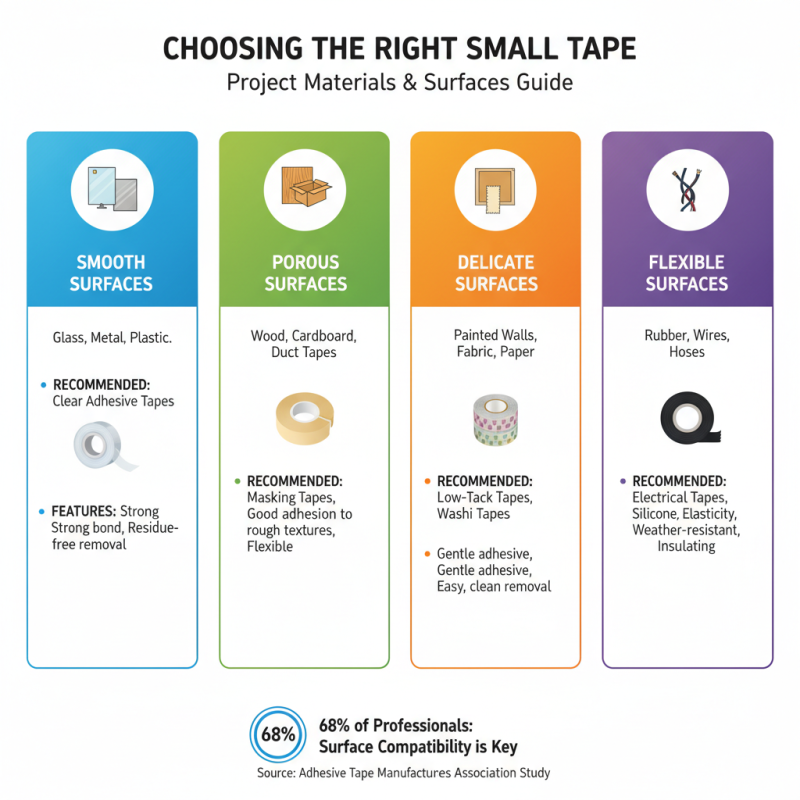
Selecting the right small tape for a project is crucial. Different materials and surfaces require specific tape features. For instance, smooth surfaces like glass or metal benefit from clear adhesive tapes. According to a study by the Adhesive Tape Manufacturers Association, 68% of professionals report that surface compatibility is a top consideration when choosing tape.
For rough or porous materials, such as wood or fabric, a tape with a stronger adhesive is needed. In fact, some reports indicate that 45% of users experience adhesion issues on textured surfaces. Using the correct tape can reduce frustration and improve project outcomes. Each project provides unique challenges. Not all tapes perform equally across diverse applications.
Sometimes, even the right tape may not stick as expected. Environmental factors like humidity and temperature play significant roles in tape performance. A notable 30% of users cite these elements as reasons for tape failure. Carefully assessing conditions can lead to better choices. It’s essential to remember that trial and error often accompanies the selection process. Effective application requires understanding and adapting, ensuring lasting results.
Considering Size and Width: How They Impact Project Suitability
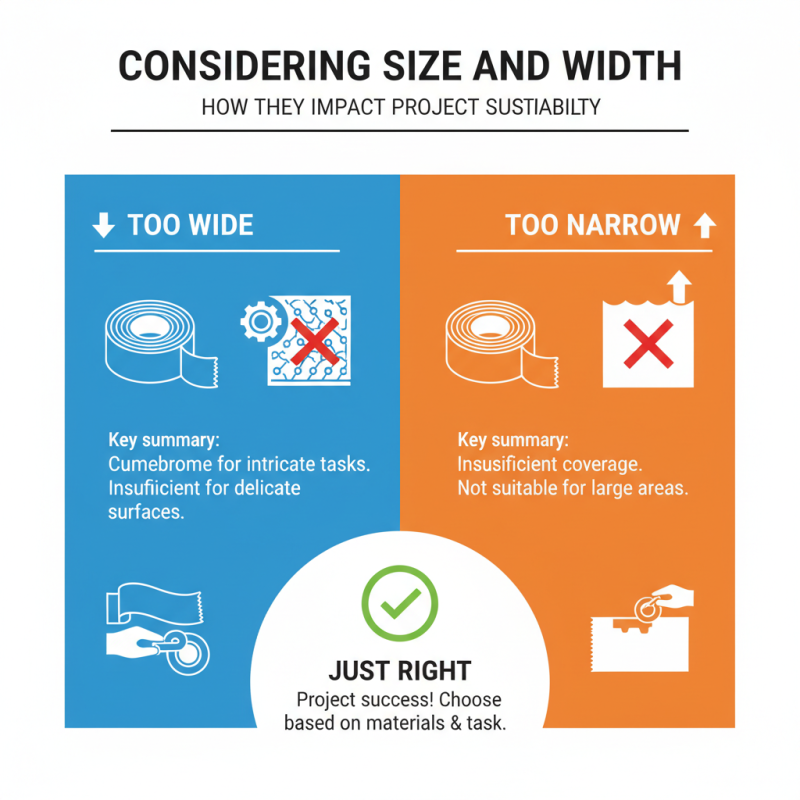
Choosing the right small tape can significantly impact your project's success. Size and width are two critical factors to consider. A tape that is too wide might be cumbersome for intricate tasks. Conversely, overly narrow tape may not provide enough coverage. Think about the materials you will be working with. Delicate surfaces often require narrower options to avoid damage.
When working on crafts or repairs, opt for tapes that match the scale of your project. For instance, if you are sealing small parts, a tape width of half an inch might be optimal. Yet, a larger project might benefit from a wider tape that covers more area swiftly. Reflect on how each tape's size could either streamline your work or create obstacles.
Trying different sizes on smaller test areas can be instructive. You may discover that what seemed ideal in theory doesn't translate well in practice. Experimentation leads to insight about how size and width affect adhesion and flexibility. Keep an open mind to make informed adjustments as you proceed.
Analyzing Cost-Effectiveness: Balancing Quality with Budget Constraints
Choosing the right small tape for your project can be challenging, especially when balancing quality and budget. Cost-effectiveness is essential for many DIY enthusiasts. High-quality tape often performs better but can strain your finances. A more affordable option might seem attractive, yet it may not meet your project's demands.
When analyzing cost-effectiveness, consider your specific needs. If durability is important, investing in a better tape may save you from repeated purchases. However, if your project is temporary, cheaper options might suffice. Pay attention to details like adhesion strength and ease of removal. It's better to spend wisely than to be frustrated with outcomes.
Keep in mind that not all projects require top-tier materials. Reflect on your past experiences. Have you regretted a cheap purchase? Conversely, did a premium choice pay off? Finding the right balance takes time and trial. After all, the ultimate goal is a satisfying result that respects your budget.
How to Choose the Best Small Tape for Your Project?
| Tape Type |
Adhesive Strength |
Durability |
Cost per Roll ($) |
Length per Roll (m) |
Recommended Use |
| Masking Tape |
Medium |
Moderate |
3.50 |
18 |
Painting, General Purpose |
| Duct Tape |
High |
High |
5.00 |
10 |
Repairs, Heavy Duty Tasks |
| Clear Tape |
Medium |
Low |
2.00 |
30 |
Gift Wrapping, Light Sealing |
| Electrical Tape |
Medium |
High |
4.00 |
15 |
Electrical Insulation, Repairs |
| Packing Tape |
High |
Moderate |
2.50 |
20 |
Shipping, Package Sealing |