Top Quality Hot Melt Packing Tape for Global Buyers?
In the packaging industry, Hot Melt Packing Tape plays a crucial role in ensuring product safety and integrity during transit. According to a report from Smithers Pira, the global adhesive tape market is expected to reach $60 billion by 2025, with hot melt adhesives being a significant contributor. This growth reflects the increased demand for reliable packaging solutions across various sectors.
Hot Melt Packing Tape offers superior adhesion, ensuring strong seals for boxes and packages. Its performance in extreme conditions has made it a favorite among manufacturers and distributors. However, the quality of available products can vary significantly. Buyers must be diligent when selecting suppliers, as lower-quality options may compromise safety and increase costs in the long run.
It’s essential to recognize that not all Hot Melt Packing Tape meets stringent industry standards. Discerning buyers should seek trusted suppliers who adhere to guidelines set by organizations like ASTM International and ISO. Awareness and education in this field can elevate the quality of packaging solutions.

Understanding Hot Melt Packing Tape: A Comprehensive Overview
Hot melt packing tape is essential in packaging and shipping industries. It offers superior adhesion and durability. This tape uses a thermoplastic adhesive that melts and bonds securely when applied. Understanding its properties helps buyers make informed decisions.
When choosing hot melt packing tape, consider the width and thickness. A wider tape may cover more surface area, while thicker tape provides extra strength. Different formulations can suit various materials. Some tapes work better on corrugated surfaces, while others perform well on smooth ones. Testing before large-scale use is crucial.
Tips: Always check the tape's temperature resistance to ensure it performs well in your environment. Poor performance can lead to damaged packages. A strong bond is necessary, but too much can be problematic. Remember, an over-application can lead to messy situations.
Additionally, storage conditions affect tape longevity. Store in a cool, dry area to maintain its adhesive qualities. Be mindful that excessive heat can cause adhesive breakdown. While hot melt packing tape is reliable, occasional issues arise. Evaluating user experiences can guide your selection process.
Key Features of High-Quality Hot Melt Packing Tape for Buyers
When choosing high-quality hot melt packing tape, several key features stand out for buyers.
Adhesion strength is paramount. According to a recent industry report, tapes with high adhesion levels can adhere to various surfaces.
This ensures packages remain securely sealed during transit. In fact, 75% of logistics companies prioritize tape strength
to minimize damage during shipping.
Durability is another crucial aspect. Hot melt packing tapes should withstand different
environmental conditions. They must endure changes in temperature and humidity. A tape that fails under these conditions risks package integrity.
Some studies highlight that packaging failures lead to nearly 15% of product loss in transit. This emphasizes the need for reliable sealing solutions.
Buyers should also consider ease of use. A tape that dispenses smoothly and cuts cleanly speeds up packaging processes.
Some reports show that operational efficiency improves by up to 30% when workers can handle tape effortlessly. However, not all tapes meet these criteria.
Therefore, understanding these features can guide buyers toward making informed choices.
Comparative Analysis: Hot Melt vs. Other Types of Packing Tapes
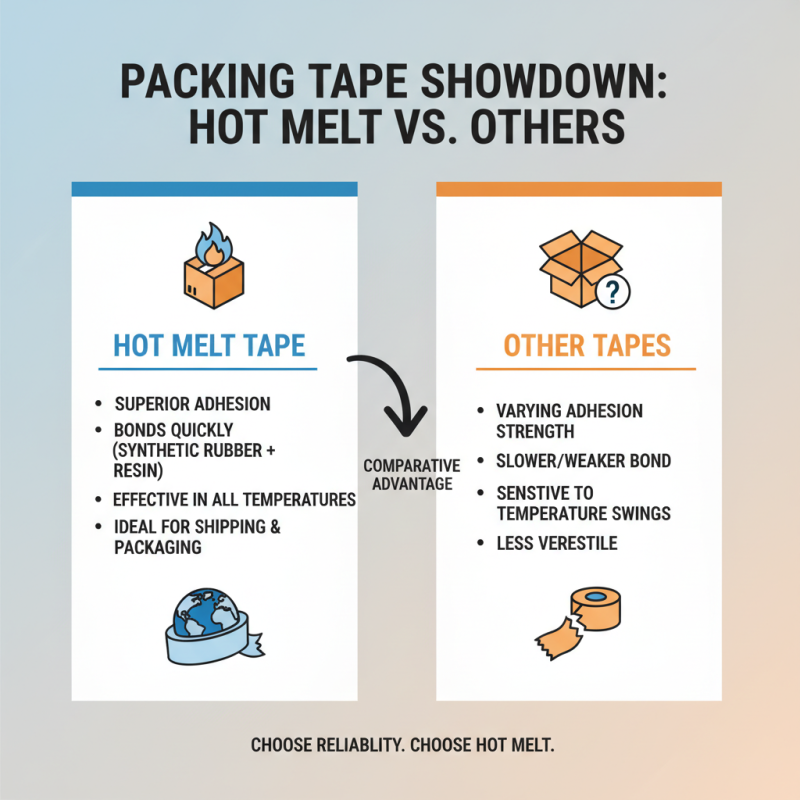
When considering packing tapes, hot melt tape stands out for its strong adhesion. It bonds quickly to various surfaces, making it an ideal choice for packaging and shipping. This tape is often made from a combination of synthetic rubber and resin. Its performance under various temperatures is commendable. Hot melt tape remains effective even in fluctuating conditions.
Comparatively, acrylic tapes offer a different set of advantages. They are more resistant to UV light and heat, which can be beneficial for long-term storage. However, they may not adhere as quickly as hot melt options. In humid conditions, they can struggle to bond effectively. On the other hand, pressure-sensitive tapes are easier to handle. They require no special equipment for application. Their drawback, however, is reduced adhesion, especially on rough surfaces.
While hot melt tape excels in many areas, it is not without limitations. It can be less green compared to its acrylic counterparts. Additionally, its thickness may create challenges for some automated processes. The choice between types depends on individual needs. Evaluating each option's pros and cons allows buyers to make informed decisions tailored to specific applications.
Global Suppliers: Leading Manufacturers of Hot Melt Packing Tape
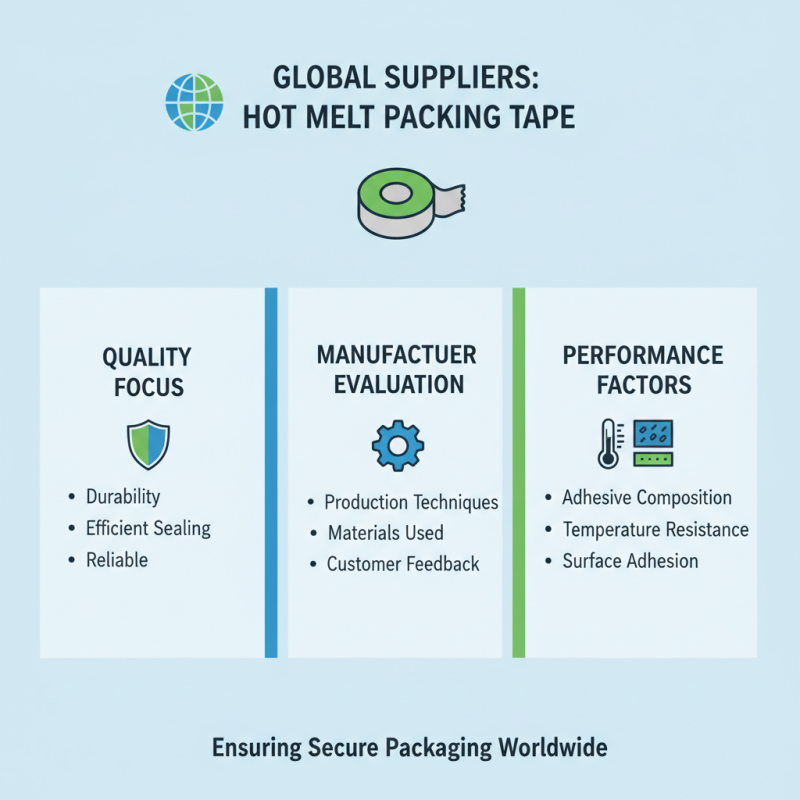
When considering hot melt packing tape, quality is of utmost importance for global buyers. Leading manufacturers focus on producing reliable tapes that ensure durability and efficient sealing. These companies are often evaluated based on their production techniques, materials, and customer feedback. For instance, some suppliers may use varying adhesive compositions, affecting performance under different temperatures and types of surfaces.
Manufacturers worldwide strive to address customer needs. However, not all products are created equal. Buyers sometimes report discrepancies in tape adhesion or thickness. These issues highlight the importance of selecting experienced suppliers with a solid reputation. A thorough review process helps maintain quality standards and aligns product capabilities with market demands.
It is essential for global buyers to access reliable suppliers. Establishing clear communication about expectations is crucial. Some buyers might overlook certain details, leading to dissatisfaction. A proactive approach in reviewing samples before bulk orders can help mitigate risks. Being informed about potential issues lays the groundwork for successful partnerships.
Applications and Best Practices for Using Hot Melt Packing Tape
Hot melt packing tape is widely used in various applications. It is especially effective for shipping and packaging tasks. Many businesses rely on it to secure packages efficiently. This type of tape consists of a thermoplastic adhesive which bonds quickly to surfaces. Its sturdy nature enhances the integrity of packaging, making it suitable for both light and heavy items.
In practice, applying hot melt tape requires attention to detail. Ensure surfaces are clean and dry for optimal adhesion. A little mistake, like applying the tape at an angle, can affect its performance. It's important to press down firmly to avoid lifting edges. Some users may find it challenging to rewind the tape; this could lead to wasted material. Regular maintenance of the tape dispensers can alleviate this problem.
Many industries benefit from hot melt packing tape. E-commerce, manufacturing, and logistics frequently use it. However, users should be cautious of temperature changes affecting the tape's adhesive properties. Testing the tape on different surfaces before full applications can save time and resources. While hot melt tape is reliable, understanding its limitations is crucial for maximizing effectiveness.