Leave Your Message

7 Tips for Buying Paper Kraft Tape

Paper Kraft Tape is no longer judged by appearance alone. Its brown surface may suggest sustainability, yet performance depends on fiber strength, adhesive chemistry, roll quality, and storage conditions. Smithers’ report, The Future of Sustainable Packaging to 2028, estimates that the global sustainable packaging market could grow from about $274 billion in 2023 to nearly $394 billion by 2028. Paper-based tapes are benefiting from this shift, but rising demand can also create inconsistent product quality.

Walter Soroka, author of Fundamentals of Packaging Technology, defines packaging as “a system of preparing goods for transport, distribution, storage, retailing, and end-use.” His definition explains why choosing Paper Kraft Tape requires more than checking price or color. The tape must match the carton surface, sealing method, shipping distance, and recycling goals. A box stored in a humid warehouse needs different protection from one shipped across a dry inland route.

This guide presents seven practical buying tips. It examines tape width, thickness, tensile strength, adhesive type, unwind behavior, moisture resistance, and supplier evidence. Ask for test data. Request samples. Test a sealed carton overnight, not just for five minutes. A clean tear is useful, but it proves little by itself. Even “eco-friendly” claims deserve scrutiny, because paper content does not automatically mean easy recyclability. The ideal roll feels firm, unwinds evenly, and bonds without curling at the edges. Small details matter. Some recommendations may need adjustment for unusual cartons, cold storage, or automated machines. That uncertainty is worth acknowledging before placing a large order.
7 Tips for Buying Paper Kraft Tape

Define Paper Kraft Tape and Its Common Uses

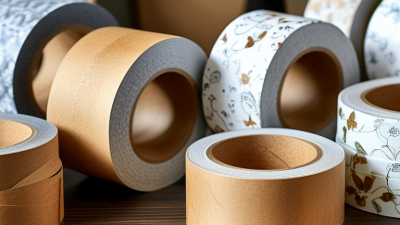
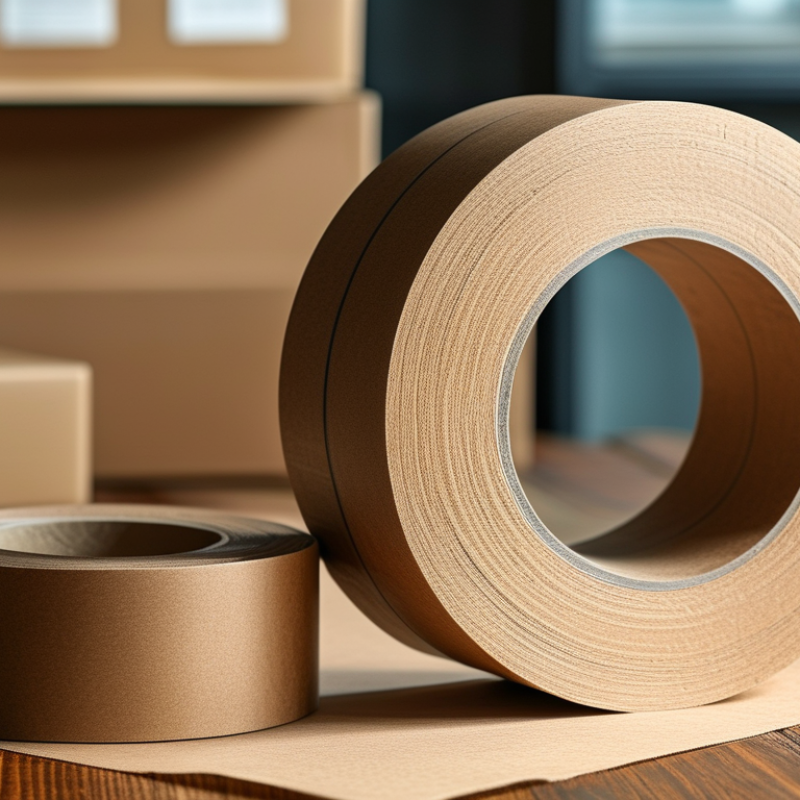
Paper kraft tape is an adhesive tape made with kraft paper backing. Its brown, fibrous surface gives cartons a natural appearance. Some types use pressure-sensitive adhesive. Others require water to activate the adhesive. Reinforced versions contain paper or synthetic threads for extra strength. The right type depends on the package, not its color alone.

Common uses include sealing cardboard boxes, bundling lightweight materials, labeling parcels, and repairing paper packaging. Water-activated tape bonds closely with corrugated cardboard. It can improve tamper visibility because removing it often damages the carton surface.

Pressure-sensitive paper tape works faster for quick closures and small packing tasks. It is also useful for crafts, temporary surface protection, and organizing cables. Keep it dry.

When buying paper kraft tape, check width, thickness, adhesive type, and roll length. Test it on the actual carton first. Dusty or recycled cardboard may reduce adhesion.

In a small warehouse, I have found that a tape dispenser improves consistent application and reduces waste. Still, stronger tape is not always better. Excessive adhesive can tear thin paper or leave residue. I once selected a narrow roll for heavy parcels, and the edges lifted during storage. That mistake showed me that package weight and storage humidity deserve equal attention. Some product descriptions also sound clearer than they really are. Verify performance with a practical trial.
Assess Tape Material, Strength, and Adhesive Performance

7 Tips for Buying Paper Kraft Tape

Assess Tape Material, Strength, and Adhesive Performance

Inspect the kraft paper before judging its price. A dense, even surface usually resists tearing during carton sealing. Recycled fibers can support sustainability goals, but they may create a rougher texture. Check the tape’s thickness, fiber direction, and moisture resistance. Thin tape feels efficient, yet it can split around sharp carton edges. Hold a sample against light and look for weak, uneven areas. This simple check often reveals manufacturing variation.

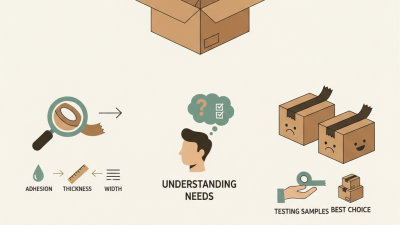
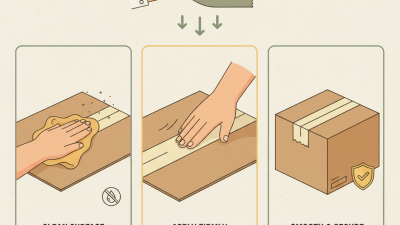
Test strength on the actual boxes you use. Pull the tape across a filled carton, then lift the box briefly. Watch for stretching, edge lifting, or sudden tearing. Adhesive performance also depends on dust, temperature, and board coating. Press the tape firmly and allow proper contact time. Compare peel strength after ten minutes and again after twenty-four hours. For cold storage, test the tape below normal room temperature. Some adhesives lose grip faster than expected. Water-activated tape may bond deeply with corrugated fibers, while pressure-sensitive tape offers quicker application. Choose according to workflow, not habit.

A test I once trusted was too clean. The cartons were new, dry, and dust-free. Real packaging was less cooperative. Repeat trials with recycled boxes, uneven surfaces, and realistic handling. Check residue after removal, especially on printed cartons. Ask suppliers for test data, but verify important claims independently. Small samples can prevent expensive failures.

Choose the Right Width, Length, and Packaging Format

When buying paper kraft tape, match the width to the sealing task, not only the carton size. N arrow 25 mm tape works well for small boxes, labels, and quick seam repairs. Wider 48–75 mm tape covers broad flaps with fewer passes. Measure twice. A tape that is too narrow may leave exposed edges, while an oversized roll can waste material and feel awkward in hand.

Length affects both cost and workflow. Check the roll length before comparing prices. A longer roll reduces replacement stops during busy packing periods, but it may be inconvenient for occasional users. Estimate daily carton volume, then allow extra tape for overlaps, uneven cuts, and mistakes. In practice, a small sample order is useful. My first estimate was often too optimistic. Test the tape on your actual carton surface, especially if the cardboard is dusty, recycled, or slightly rough.

Packaging format also deserves attention. Individual rolls suit small work areas and simpler storage. Multi-roll packs usually improve handling efficiency, provided the rolls will be used before moisture affects the paper. Keep it dry. Choose cartons that protect the tape from crushing and humidity during transport. For manual packing, consider rolls that fit the dispenser comfortably. For larger operations, compare case quantity, inner wrapping, and storage space. Clear specifications for width, length, core size, and roll count make purchasing decisions more reliable.

Check Sustainability, Storage Requirements, and Product Quality

7 Tips for Buying Paper Kraft Tape

When buying paper kraft tape, inspect its sustainability claims carefully. Ask whether the paper contains recycled fiber and whether the adhesive uses water-based ingredients. Request supporting documents, not vague green language. Check whether the tape is recyclable with your packing process. “Compostable” is not the same as recyclable. Also, consider the roll’s core and packaging. Less plastic helps, but only when the tape still protects the parcel. I once chose thinner tape to reduce material use, but it split during cold-weather shipping. That mistake increased waste.

Storage affects performance more than many buyers expect. Keep rolls in a dry, clean room, away from direct sunlight and heaters. Follow the supplier’s temperature and humidity instructions. Store rolls upright or in their original cartons, depending on the technical guidance. Avoid placing heavy cartons on top of them. Before ordering large quantities, test a small batch on your actual boxes. Check adhesion after ten minutes, then again after twenty-four hours. Test a dusty, recycled carton too. Real surfaces can be unpredictable.

Product quality also depends on the application. Look for even winding, smooth edges, consistent thickness, and a clean tear. Pull a short strip by hand. It should not stretch excessively or leave loose fibers. Compare tensile strength, peel adhesion, and temperature resistance on the specification sheet. A supplier with clear test methods is easier to trust. Still, documents cannot replace handling trials. Your warehouse team may notice problems that laboratory figures miss. That feedback deserves attention.

7 Tips for Buying Paper Kraft Tape - Check Sustainability, Storage Requirements, and Product Quality

Tip Buying Criterion What to Check Practical Target or Reference Why It Matters
1 Confirm the paper content Review the stated paper or cellulose content and identify plastic film, synthetic fibers, or mixed-material layers. For easier paper recycling, choose a tape designed as a paper-based product with minimal non-paper components. Material composition affects recyclability and the ease of separating tape from corrugated packaging.
2 Check sustainability evidence Look for independently verified forestry, recycled-content, compostability, or environmental-management claims where relevant. Prefer specific, verifiable claims with certification details rather than vague terms such as “green” or “eco-friendly.” Clear evidence helps prevent misleading environmental claims and supports responsible purchasing decisions.
3 Match the adhesive to the application Compare water-activated adhesive, pressure-sensitive adhesive, and reinforced construction according to the package and working conditions. Use water-activated tape when a strong bond to corrugated board and tamper-evident sealing are priorities; use pressure-sensitive tape when quick application is required. Adhesive type influences application speed, bond strength, equipment needs, and performance on dusty or recycled cardboard.
4 Evaluate product quality Inspect roll winding, edge quality, paper coating, tear consistency, adhesion, and resistance to splitting during application. Request a sample and test it on the actual carton surface before placing a large order. A small trial can reveal poor adhesion, uneven coating, excessive fiber shedding, or unreliable dispensing.
5 Review size and performance specifications Compare tape width, roll length, thickness or basis weight, tensile strength, elongation, and recommended carton weight. Select a width that fully covers the carton seam and a strength level suitable for the package weight and handling conditions. Correct sizing reduces material waste and lowers the risk of seam failure during transport.
6 Follow storage requirements Keep rolls in their original packaging, protected from moisture, direct sunlight, dust, and extreme temperatures. A commonly recommended storage range for pressure-sensitive tape is approximately 15–25°C with relative humidity around 40–60%; always follow the product specification. Improper storage can reduce tack, cause edge damage, deform rolls, and shorten usable shelf life.
7 Compare total cost and supply reliability Consider price per usable metre, core size, packaging waste, minimum order quantity, lead time, and consistency between batches. Calculate cost per sealed carton rather than comparing roll prices alone, and maintain suitable stock for normal consumption. The lowest unit price may not be the lowest operating cost if the tape causes rework, waste, or supply interruptions.

Note: Performance and storage recommendations vary by paper grade, adhesive formulation, packaging surface, and application method. Always verify the technical data sheet and conduct an application trial.

Compare Suppliers, Pricing, and Application-Specific Value

7 Tips for Buying Paper Kraft Tape

Compare suppliers beyond the roll price. Request width, length, core size, adhesive grade, moisture resistance, and carton compatibility. A cheaper roll may contain less usable tape. Add dispenser costs, labor time, and rejected cartons to the calculation. The U.S. Bureau of Labor Statistics tracks converted paper and paperboard product prices, showing why quarterly quotations can become outdated. Ask suppliers to date their offers.

Match the tape to the application. Water-activated kraft tape bonds well with corrugated fibers and can support tamper-evident packing. Pressure-sensitive paper tape is faster for low-volume packing, but adhesion may weaken on dusty or cold cartons. Test a small batch first. Include recycled content, fiber separation, and disposal guidance in the supplier comparison. Eurostat reported an EU paper and cardboard packaging recycling rate of about 82% in 2022. The U.S. EPA recorded 46.2 million tons of recycled paper and paperboard in 2022. These figures support paper-based recovery, but they do not guarantee every tape-and-carton combination is recyclable. Check local facilities. Measure peel strength, edge lifting, application time, and carton damage after transport. Do not trust a glossy sample. A modest mistake in tape width can increase waste and handling time. Ask for technical sheets and batch consistency records. Then compare total cost per sealed carton, not cost per roll.