Leave Your Message
-
Phone
-
Email
-
Whatsapp

Choosing the China Best Easy Tear Packaging Tape Supplier? requires more than comparing online prices. The right supplier should understand warehouse routines, carton surfaces, sealing pressure, and delivery schedules. Easy Tear Packaging Tape must open smoothly without weakening the package during transport. That balance is easy to overlook.
This guide examines supplier capability through practical packaging details. We consider adhesive performance, tear consistency, backing strength, roll length, and storage stability. A reliable supplier should provide clear technical data and representative samples. Test the tape on corrugated cartons, recycled boxes, and coated surfaces. Watch how it tears at different angles. Check whether adhesive residue remains after removal. Small details matter.
Experience also reveals weaknesses. A tape that tears well in a showroom may struggle in a cold warehouse. A low quoted price may hide shorter rolls or uneven coating. No supplier is perfect. Even careful comparisons can miss a hidden variable. Ask for batch information, production photos, quality inspection records, and export experience. Confirm packaging protection before shipment. Request replacement terms in writing.
The best partnership develops through repeated testing and honest communication. Suppliers should explain limitations, not only promote advantages. They should recommend suitable widths, thicknesses, and adhesive types for your application. Clear answers build confidence. Slow answers may signal future problems.
This introduction will help buyers compare Chinese manufacturers with greater discipline. It focuses on evidence, usability, and long-term reliability. The goal is not simply to find the cheapest tape. It is to identify a dependable supplier for consistent daily packaging performance.
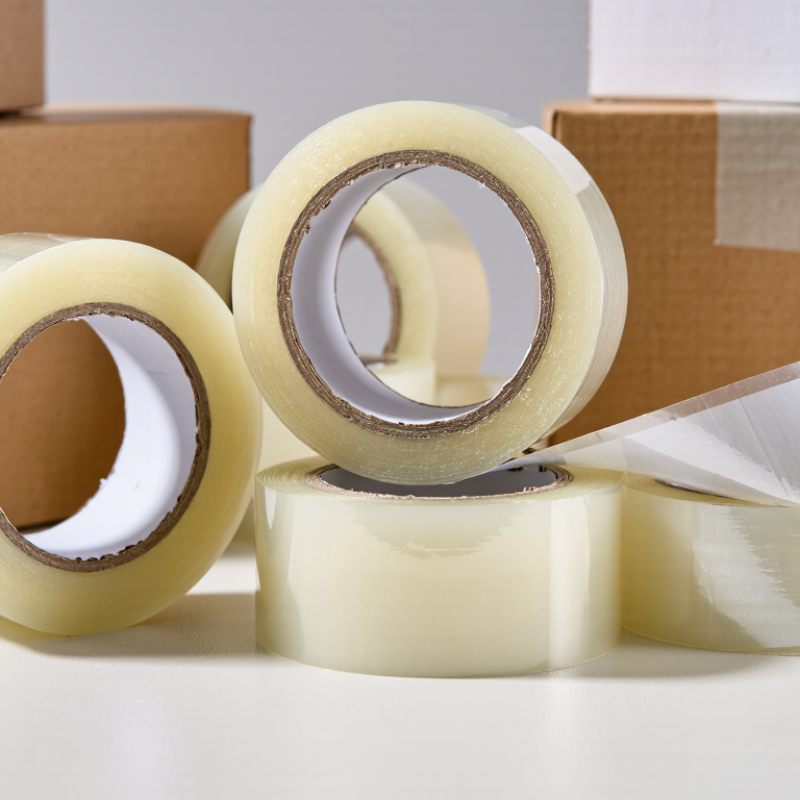
Easy-tear packaging tape is an adhesive tape designed to separate by hand, without scissors or a cutting tool. It usually combines a paper or lightweight film backing with pressure-sensitive adhesive. It tears by hand. The tape can close cartons, wrap small parcels, and secure tissue, labels, or protective inserts during packing.
The main difference is controlled tearability. A suitable tape should open cleanly across the roll width while maintaining enough strength during handling. Some products use a reinforced structure, while others rely on a balanced paper fiber pattern. In my packaging tests, tear performance depends on pulling angle, box surface, temperature, and storage time. A cold roll may feel stiff. A dusty carton can also weaken adhesion.
For practical use, check three details before selecting a supplier: tear force, holding strength, and adhesion on the intended carton material. Ask for samples and test them on filled boxes, not empty ones. Measure whether the tape stays closed after stacking and transport vibration. A reliable supplier should provide technical data, batch information, and clear storage guidance. However, specifications do not tell the whole story. A tape that tears beautifully may fail on recycled corrugated board. That limitation deserves attention. Small tests often reveal more than attractive product descriptions.
| Evaluation Dimension | Typical Information | Why It Matters |
|---|---|---|
| Definition | Easy-tear packaging tape is pressure-sensitive tape designed to be torn by hand without scissors or a cutting tool. | It can simplify carton sealing, opening, repacking, and warehouse handling. |
| Common Backing Materials | Crepe paper, flat kraft paper, reinforced paper, polypropylene film, and other engineered tearable films. | The backing affects tear direction, printability, flexibility, moisture resistance, and recycling considerations. |
| Adhesive Types | Hot-melt synthetic rubber, water-based acrylic, solvent-based acrylic, and natural-rubber adhesive systems are commonly used. | Adhesive selection influences initial tack, holding power, temperature performance, residue, and surface compatibility. |
| Typical Thickness | Many packaging tape constructions fall approximately within 40–150 micrometres, depending on the backing and adhesive design. | Thicker constructions generally provide greater cushioning and durability, while thinner grades may reduce material usage. |
| Tear Performance | A suitable product should tear cleanly by hand along the intended direction while resisting accidental splitting during application. | Balanced tearability helps improve packing speed and reduce uneven tape edges or carton damage. |
| Typical Widths | Common packaging widths include approximately 48 mm, 50 mm, 60 mm, 72 mm, and 75 mm, with custom sizes also available. | Width should match the carton seam, dispenser, application method, and required coverage. |
| Typical Roll Lengths | Commercial roll lengths commonly range from about 25 m to 100 m, while machine-use rolls may be much longer. | Longer rolls can reduce replacement frequency, provided the roll remains compatible with the dispenser and operator requirements. |
| Temperature Range | Performance varies by adhesive; many general-purpose grades are intended for ordinary indoor or moderate warehouse conditions, while cold-temperature grades are specially formulated. | Application temperature and storage conditions can significantly affect adhesion and holding power. |
| Suitable Carton Surfaces | Best results are normally achieved on clean, dry, dust-free corrugated cardboard and paperboard surfaces. | Dust, oil, moisture, loose fibres, and heavily recycled surfaces may reduce adhesion. |
| Printing Options | Paper-backed tape is generally suitable for flexographic or other conventional printing processes, subject to ink and coating compatibility. | Printed tape can support handling instructions, lot identification, warnings, and packaging communication. |
| Application Methods | Hand application, manual tape dispensers, and selected automated packaging equipment may be used, depending on roll construction. | Testing with the actual dispenser and carton type is recommended before large-scale purchasing. |
| Quality Tests | Relevant checks may include adhesion, tensile strength, elongation, tear force, unwind performance, thickness, roll dimensions, and aging stability. | Testing helps confirm consistent performance across production batches and application environments. |
| Storage Conditions | Store rolls in a clean, dry area away from direct sunlight and excessive heat or moisture; keep them in their original packaging until use. | Proper storage helps preserve adhesive performance and prevent deformation of the tape roll. |
| Supplier Selection Checklist | Review technical specifications, sample performance, production consistency, packaging quality, customization capability, inspection procedures, lead time, and export documentation. | A complete evaluation reduces the risk of inconsistent tearability, weak carton sealing, delivery delays, and unsuitable product specifications. |