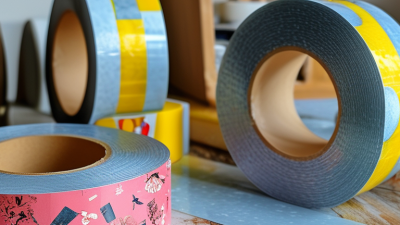
China has become a major sourcing hub for Stationery Tape, serving distributors, retailers, schools, and office-supply brands worldwide. Its manufacturers offer transparent tape, masking tape, double-sided tape, decorative designs, and custom-printed rolls. Yet a low factory price does not guarantee dependable performance. Buyers must examine adhesive consistency, unwind force, roll length, core quality, packaging, and production traceability.
Dr. Steven Abbott, an independent adhesion and coating specialist, often emphasizes, “Adhesion is a system, not a single number.” This principle matters when comparing Chinese suppliers. A sample may stick well on clean paper but fail on recycled cardboard or humid desks. Serious manufacturers should provide technical data, batch records, factory photographs, and clear answers about acrylic or rubber-based adhesive systems. Certifications can support trust, but they should be verified rather than accepted at face value.
This guide introduces leading Chinese Stationery Tape manufacturers for global buyers. It considers product range, customization, export experience, quality controls, minimum order quantities, and communication speed. A useful supplier should manage small design changes without losing consistency across thousands of rolls. Request samples first. Test them in real conditions, including cold storage, warm warehouses, and repeated daily use.
The selection process is not perfect. Public information can be incomplete, and factory capabilities may change. Buyers should still conduct audits, confirm specifications, and review shipping documents before placing large orders. The strongest partnership often develops through careful testing, honest feedback, and a willingness to question attractive promises.
China’s stationery tape manufacturing serves schools, offices, craft studios, and light packaging users worldwide. Factories commonly produce transparent tape, colored tape, masking tape, double-sided tape, and decorative paper tape. Each type needs a different balance of clarity, adhesion, thickness, and unwind performance.
Biaxially oriented polypropylene, or BOPP, is widely used for clear office tape. It offers clean visibility and practical tensile strength. Paper carriers suit labeling, writing, and craft work. PVC remains useful where flexibility matters, though buyers should review local environmental requirements.
Adhesives may be acrylic, rubber-based, or hot melt. Acrylic systems often resist aging better. Rubber-based options usually provide faster initial tack. This is not absolute.
Production quality depends on more than a smooth roll. Experienced inspectors check coating weight, splice control, edge trimming, and core alignment. They also test peel strength, holding power, unwind noise, and residue after removal. Humidity and temperature can change results. A tape that performs well in a Chinese warehouse may behave differently in a cold classroom. Reliable suppliers should provide technical data, batch records, sample approval, and material compliance documents. Buyers should test the actual application, not only trust a catalog image. I have seen attractive samples fail during long storage. That mistake is expensive. Clear specifications prevent it.

China Top Stationery Tape Manufacturers for Global Buyers
Evaluating a stationery tape manufacturer requires more than checking price and sample appearance. Grand View Research estimates the global adhesive tapes market will expand at a 5.4% CAGR from 2024 to 2030. This broader market figure signals strong demand, but it does not prove stationery tape quality. Ask manufacturers for batch records, coating specifications, and recent test reports. Check peel adhesion, holding power, tensile strength, thickness, and unwind force. Samples can mislead.
A reliable factory should show traceable raw materials, controlled coating rooms, calibrated testing equipment, and documented inspection procedures. ISO 9001 certification can support process discipline, but it cannot replace factory verification. Request production videos, quality-control forms, and references for similar export volumes. The Smithers report, The Future of BOPP Films to 2028, highlights continuing investment in high-performance film production. Therefore, buyers should examine film clarity, surface treatment, and adhesive stability, not only finished roll appearance.
Small details matter. Test rolls after heat, humidity, and storage exposure. Compare the first and last cartons from one batch. Ask how rejected rolls are isolated. A manufacturer may provide excellent samples while changing adhesive formulas later. This risk is easy to overlook. No checklist is perfect. Independent pre-shipment inspection remains sensible, especially for large orders. Clear tolerances, approved samples, and written corrective-action procedures make supplier evaluation more reliable.
This buyer evaluation scorecard uses a 100-point procurement framework. Quality consistency and adhesive performance receive the greatest weight because they directly affect writing, packaging, and long-term product reliability. Buyers should also verify customization capability, compliance documents, production lead time, and total landed cost before selecting a manufacturer.
Global buyers evaluating China’s top stationery tape manufacturers should examine certification evidence, not only product catalogs. ISO 9001 indicates a controlled quality system, while ISO 14001 reflects structured environmental management. These certificates should show the factory name, valid dates, and certified production scope. A certificate alone is not enough.
For adhesive tape, practical testing matters. Buyers can request peel adhesion results, tensile strength, holding power, thickness tolerance, and unwind performance. ASTM D3330 and ASTM D3654 are commonly referenced methods for these tests. Each production batch should have traceable records, including adhesive lot, coating date, carton quantity, and inspection results. Look closely.
For products entering regulated markets, request applicable REACH or RoHS declarations and independent laboratory reports. Paper-based tapes may also require evidence for recycled content or responsible fiber sourcing, depending on the buyer’s claim. Sampling should include hot, humid, and cold storage conditions. A tape that bonds well in a showroom may fail on dusty cartons. That is a real risk.
Experienced manufacturers usually provide pre-shipment inspections, retained samples, and corrective-action reports. Still, no supplier is perfect. Small variations in color, roll edge, or adhesive odor can appear between batches. Buyers should define acceptable limits in writing and review failures without hiding them. Clear records build more trust than impressive wording.
| Category | Certification, Regulation or Test Standard | What It Covers | Key Evidence Global Buyers Should Request | Relevance to Stationery Tape |
|---|---|---|---|---|
| Quality management | ISO 9001:2015 | A quality management system covering process control, documented procedures, corrective action and continual improvement. | Valid certificate, certification scope, issuing certification body and certificate validity dates. | Supports consistent control of coating, slitting, winding, packaging and final inspection. |
| Environmental management | ISO 14001:2015 | An environmental management system for identifying environmental impacts and controlling operational risks. | Valid certificate, site address, certification scope and current surveillance status. | Useful for buyers evaluating solvent use, energy consumption, waste handling and environmental objectives. |
| Worker health and safety | ISO 45001:2018 | An occupational health and safety management system for workplace hazards and risk reduction. | Certificate showing the manufacturing site and activities included in the scope. | Provides additional supply-chain assurance for factories using coating, adhesive and converting equipment. |
| Paper traceability | FSC Chain of Custody | Traceability of eligible forest-based material through certified supply chains. | Valid certificate and transaction documentation; the FSC claim should match the product and packaging claim. | Relevant to paper-backed tape, cardboard cores, labels and retail packaging when certified material is specified. |
| Chemical compliance | EU REACH Regulation (EC) No 1907/2006 | Controls the registration, evaluation, authorisation and restriction of chemical substances placed on the EU market. | Material declaration, restricted-substance assessment and, where appropriate, laboratory test reports for relevant substances. | Applies to adhesive formulations, films, inks, release coatings, cores and packaging supplied to EU markets. |
| Restricted substances | EU RoHS Directive 2011/65/EU and Delegated Directive (EU) 2015/863 | Restricts specified substances in electrical and electronic equipment and covered components. | A documented applicability assessment and supplier declaration or test report when the tape is supplied for an in-scope application. | Usually application-dependent; it should not be presented as a universal requirement for ordinary office tape. |
| Peel adhesion | ASTM D3330/D3330M or ISO 29862 | Measures the force required to peel pressure-sensitive tape from a specified surface under defined conditions. | Test method, backing and substrate, dwell time, peel angle, peel speed, temperature, humidity and results in N/25 mm or equivalent units. | Helps compare initial and sustained adhesion for paper, plastic, metal and other intended surfaces. |
| Holding power | ASTM D3654/D3654M or ISO 29863 | Measures the time or displacement before a tape specimen slips or fails under a specified load. | Load, test panel, bond area, dwell time, temperature, humidity and failure time or displacement. | Important for tapes used for temporary mounting, bundling, labeling or light-duty holding. |
| Tensile strength and elongation | ASTM D3759/D3759M or ISO 29864 | Measures the force required to break the tape and the percentage of elongation at break. | Backing type, specimen width, test speed, conditioning environment, tensile strength and elongation results. | Indicates whether the tape can be dispensed, torn or handled without unwanted stretching or breakage. |
| Dimensional and visual control | Buyer-approved product specification | Controls tape width, roll length, core diameter, total thickness, winding quality, edge condition, transparency and surface appearance. | Inspection plan, calibrated measuring equipment, sampling level, tolerances and batch inspection records. | Prevents dispenser incompatibility, telescoping rolls, uneven edges, short rolls and visible coating defects. |
| Laboratory competence | ISO/IEC 17025 | Defines competence requirements for testing and calibration laboratories. | Laboratory accreditation certificate, accredited scope, test method and report traceability. | Improves confidence in independent chemical, physical and performance test results. |
| Packaging and shipment control | ISTA test protocol, when specified | Evaluates packaged products under simulated transport hazards such as vibration, compression and shock. | Applicable ISTA procedure, packaging configuration, conditioning details and test report. | Helps reduce crushed cartons, deformed rolls, contamination and moisture-related damage during international shipment. |
Note: Certification and regulatory requirements depend on the product construction, destination market and intended application. Buyers should verify certificate validity, scope, product applicability and current legal requirements before placing an order.
China’s stationery tape sector increasingly serves overseas buyers through OEM and ODM production. Grand View Research estimated the global adhesive tapes market at about USD 78.3 billion in 2023, with continued growth through 2030. This broader demand supports stronger export systems, but stationery tape remains highly specification-sensitive.
Export-ready manufacturers should provide commercial invoices, packing lists, carton dimensions, and reliable lead-time estimates. Experienced suppliers also prepare samples before mass production.
Buyers can request custom widths, lengths, colors, printed cores, packaging artwork, and adhesive strength. Water-based acrylic and hot-melt options may suit different classroom, office, or retail applications. Small details matter.
Minimum order quantities vary widely. Standard clear tape may start near 5,000 rolls, while printed packaging often requires 10,000 rolls or more. Custom cores and retail boxes can increase the MOQ. A low MOQ sounds attractive, but unit costs may rise sharply. That trade-off is easy to miss.
Smithers’ packaging outlook continues to highlight pressure for lighter materials and improved recyclability. Therefore, buyers should ask for material specifications, test methods, and batch consistency records.
ISO-based quality procedures help, but certificates alone are not enough. Requesting a pre-shipment inspection is wiser.
In practice, export capability must include communication, documentation, and corrective-action support, not only production capacity. Some factories still describe customization too broadly. Written samples and signed specifications reduce that risk.
Selecting a Chinese stationery tape supplier requires more than comparing unit prices. Buyers should examine production experience, adhesive consistency, and export communication. A reliable supplier can provide clear specifications, batch records, and practical samples before large-scale purchasing. Request tape width, length, thickness, core size, and packaging details in writing. These small points affect shelf presentation and warehouse efficiency.
I have found that sample testing often reveals problems that catalogs hide. Check unwinding force, adhesion on paper, residue, and performance after heat or humidity exposure. Test several batches, not only one roll. A supplier may offer attractive samples but struggle with consistent production. That possibility deserves attention. Ask about quality inspections, material sourcing, lead times, and corrective actions. Clear answers usually show stronger technical management. Certificates can support evaluation, but they should not replace physical testing.
Tips: Match the supplier to your market’s climate, price level, and retail format. Confirm carton markings and shipping documents early. Keep communication records. Avoid choosing only by the lowest quotation. A cheaper tape may create returns, damaged packaging, or slower packing work. For a fair comparison, prepare one specification sheet and send it to several qualified factories. Their questions can be as revealing as their prices.