Paper Kraft Tape may look simple: a kraft-paper strip, a pressure-sensitive adhesive, and a clean tear across a carton seam. Yet performance depends on more than appearance. Paper grade, adhesive formulation, tensile strength, unwind behavior, and storage conditions can all affect sealing reliability. For buyers comparing China’s leading manufacturers, these details matter as much as price.
Market context helps explain the interest. Smithers’ report, The Future of Global Packaging to 2028, forecasts the global packaging market reaching roughly $1.3 trillion by 2028. That figure covers packaging broadly, not Paper Kraft Tape alone, so it should not be mistaken for tape-market size. Still, it signals a large and changing market where material choice and converting consistency deserve close scrutiny.
A useful comparison should examine product specifications, quality-control practices, customization, production capacity, and export experience. Ask for current technical data sheets and representative samples; a strong claim on a webpage is not a test result. A ranking is only a starting point. The supplied material includes no verifiable expert quotation or named Paper Kraft Tape specialist, so attributing a quote here would risk misleading readers. That gap matters. This guide therefore frames the China Top 10 as a shortlist to investigate, not a substitute for supplier audits, application trials, or verified documentation.
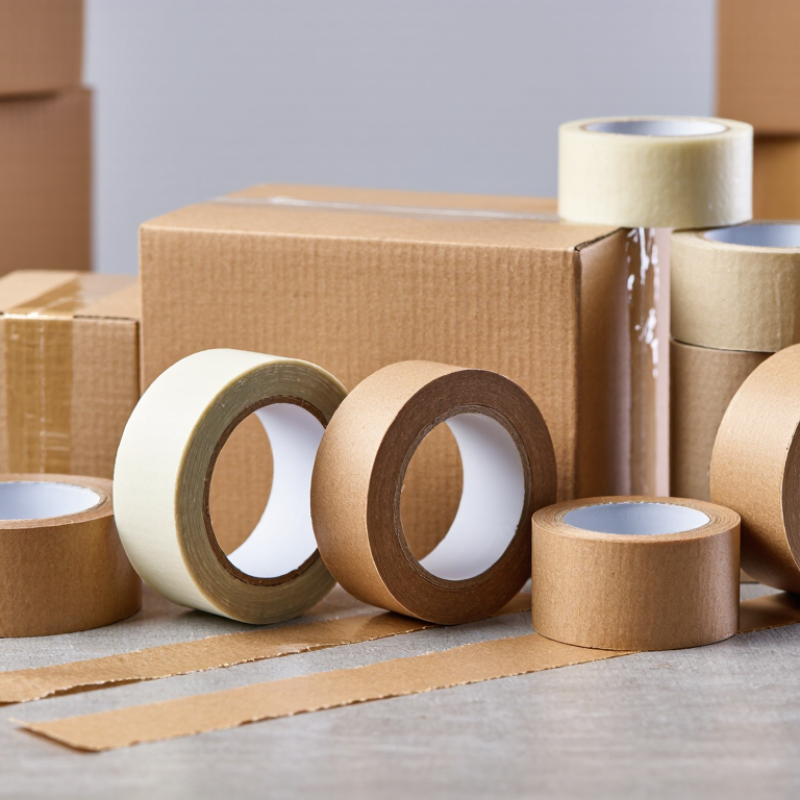
Paper kraft tape combines a kraft-paper backing with an adhesive layer. The backing is made from paper fibers, so its thickness and texture affect tear strength and handling. Some rolls tear neatly by hand; others need scissors, especially around a tight corner. The surface may feel smooth or slightly fibrous. Small details matter. Paper backing alone does not tell you how a tape will perform.
Adhesive type changes how the tape is applied. Pressure-sensitive versions stick when pressed onto a clean, dry carton. Water-activated tape needs moisture to bond, and often forms a firm seal across the box flap. Common product types include plain, unreinforced tape and reinforced tape with embedded fibers. Reinforcement can help with heavier cartons, but it does not fix a weak box or poor application. I would not treat “paper-based” as proof that every component is recyclable; check local facilities and product specifications.
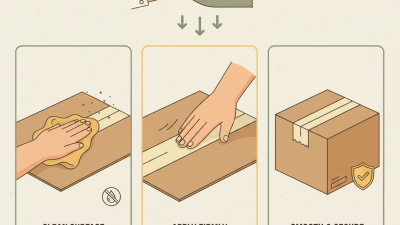
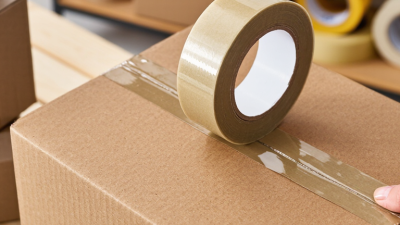
Tips: Test a short strip on the actual carton. Press along the full seam, especially at the edges. For water-activated tape, use enough water to activate the adhesive without soaking the paper. If the tape lifts, pause and check dust, moisture, or carton coating before adding more layers.
FAO reported 401 million tonnes of paper and paperboard production worldwide in 2022. That figure shows the scale of the paper sector, but it does not measure kraft tape output or packaging demand alone. The distinction matters. A large paper market does not automatically mean every tape manufacturer has equal access to suitable kraft paper.
For tape makers, paper quality is judged in practical terms. A roll must unwind cleanly, resist tearing during application, and hold its shape across a carton seam. Fiber consistency, paper thickness, and moisture can affect these results. Adhesive performance matters too, especially when boxes move through cold warehouses or humid shipping areas. Small variations become visible on the production line.
The FAO figure offers useful context, not a supplier scorecard. Buyers comparing manufacturers should ask about paper sourcing, testing methods, and batch consistency. Samples can reveal more than a broad market statistic. Still, testing is not perfect; real shipping conditions may differ from a controlled trial. That gap deserves attention.
Market and product reference table. The FAO figure is global paper and paperboard production, not China kraft-tape output. A verified, comparable public dataset ranking ten Chinese manufacturers is not established here; supplier ranking should therefore be checked against documented factory and product evidence.
| No. | Data dimension | Verified reference or evaluation data | Relevance when assessing a manufacturer | Reference |
|---|---|---|---|---|
| 1 | Global paper and paperboard production | 401 million tonnes in 2022 | Provides global paper-market context; it is not a measure of kraft tape production or Chinese manufacturer output. | FAO, *Global Forest Products Facts and Figures 2022* |
| 2 | Kraft tape product type | Common categories include water-activated tape and pressure-sensitive tape. | Confirm the supplier’s product category and intended application before comparing specifications. | Product specification and sample verification |
| 3 | Paper backing grammage | Request the declared grammage and a test report; ISO 536 specifies determination of paper and board grammage. | Enables comparison of backing weight using a recognized measurement method. | ISO 536 |
| 4 | Paper tensile properties | Ask for machine-direction and cross-direction results where relevant; ISO 1924-2 describes tensile testing of paper and board. | Helps assess backing strength and behavior during converting and application. | ISO 1924-2 |
| 5 | Peel adhesion | Request test results that identify the method, substrate, dwell time, and test conditions; ISO 29862 covers peel adhesion of self-adhesive tapes. | Peel results are meaningful only when test conditions and substrates are comparable. | ISO 29862 |
| 6 | Shear adhesion | For pressure-sensitive tape, request shear-adhesion test details and results; ASTM D3654/D3654M covers shear adhesion of pressure-sensitive tapes. | Provides a standardized way to assess resistance to sliding under specified test conditions. | ASTM D3654/D3654M |
| 7 | Tape tensile strength and elongation | Request test results and method details; ASTM D3759/D3759M covers tensile strength and elongation of pressure-sensitive tape. | Supports like-for-like review of tape strength and stretch characteristics. | ASTM D3759/D3759M |
| 8 | Adhesive and activation method | Document the adhesive type and whether activation requires water or pressure-sensitive application. | These product attributes affect application equipment, use conditions, and product selection. | Technical data sheet and sample validation |
| 9 | Product dimensions and tolerances | Verify roll width, length, core dimensions, and stated tolerances against the purchase specification. | Confirms the delivered format matches packaging-line and ordering requirements. | Purchase specification and incoming inspection |
| 10 | Supplier qualification and ranking evidence | No comparable, independently verified top-10 ranking or manufacturer-level output data is presented in this table. | Assess suppliers using verifiable factory records, quality-system evidence, current test reports, samples, and audit results rather than an unsupported ranking. | Buyer due diligence |
Note: Standards describe test methods; they do not establish a universal pass threshold for every kraft tape application. Confirm applicable requirements with the buyer and supplier.
When comparing China’s paper kraft tape manufacturers, ask how they measure peel adhesion, not just what strength they advertise. For pressure-sensitive tapes, ISO 29862 provides methods for measuring peel adhesion under controlled conditions. The test may assess removal from a defined surface, such as stainless steel, at a specified angle and speed. The result is useful only when the test method and conditions are reported clearly. Details matter.
Request the full test report, including tape width, test angle, peel speed, surface preparation, and any conditioning or dwell time. These variables can change the measured force. Check that the tested sample matches the product you intend to buy; a report for another adhesive or paper backing may not represent it. A reliable supplier should explain the setup and provide traceable sample information, rather than offering a number without context.
Peel adhesion is not the whole story. A tape that performs well on a clean steel panel may behave differently on dusty, recycled, or rough carton board. That distinction is easy to overlook. Use ISO 29862 results to compare products under the same conditions, then test samples on your own packaging line. Lab data narrows the choice; it does not settle every question.
China’s leading paper kraft tape manufacturers are best compared by what they make and how consistently they make it. Their product ranges may include plain kraft tape, reinforced tape with fiberglass yarns, water-activated tape, and printed options for carton sealing. Paper weight, adhesive type, roll width, and unwind feel can vary considerably. Small details matter.
Manufacturing capabilities often extend beyond coating. Some suppliers offer custom widths, private-label packaging, sample rolls, and production runs for different order sizes. For reinforced tape, buyers can ask about yarn placement and tensile performance. For water-activated tape, check how evenly it wets and bonds to recycled cartons. These checks make a catalog more useful, though sample testing takes time.
A fair comparison should also examine quality records, lead times, and the clarity of technical documents. Ask for measurable specifications rather than relying on broad claims such as “strong” or “eco-friendly.” Results can change with carton surface, temperature, and application pressure. One limitation is easy to overlook: a capable factory may still be a poor fit for a particular packing line. The right choice depends on actual use, not just product range.
Representative kraft tape roll widths commonly offered for packaging applications. These are product-size examples, not manufacturer rankings or market-share figures; availability varies by supplier.
Choosing a paper kraft tape supplier takes more than comparing quoted prices. Ask for recent ASTM D3330/D3330M peel-adhesion results, with test method, backing, adhesive, peel angle, and speed recorded. ASTM D3330 describes test methods; it does not set one universal pass value for every application. Set your own acceptance range against the carton surface, temperature, and handling conditions you expect. Small details matter.
Request results by production lot, not just a polished sample report. Check adhesive coat weight, paper backing consistency, unwind behavior, and edge quality. A sample may perform well on clean board but fail on dusty or recycled cartons. AF&PA’s 2023 paper recycling rate report estimates U.S. paper recovery at 65–69%. That figure is not a tape-performance benchmark, but it underscores why suppliers should verify adhesion on the actual board grades buyers use.
Export readiness also needs evidence. Review roll dimensions, core fit, carton strength, moisture protection, shipping marks, and lot traceability. Ask whether the supplier retains samples and can investigate a complaint using production records. A useful audit includes calibration records and repeat tests, not only a certificate. One weak point in many buyer checklists: they rarely test tape after storage in a hot, humid warehouse. Include that condition where relevant, and document the result before approving routine shipments.