
Choosing Clear Packing Tape in 2026 is less about finding the shiniest roll and more about matching tape to the carton, contents, and handling conditions. Clear Packing Tape can look similar on a store shelf, yet rolls differ in film strength, adhesive, width, and how smoothly they unwind. Those differences matter when a box is stacked, moved, or stored through changing temperatures. Small details count.
This guide looks at practical ways to compare tape before buying. It considers carton weight, surface texture, sealing method, and whether a hand dispenser will be used. A light parcel may need a different tape from a heavy box with dusty or recycled cardboard. A quick test on the actual carton can reveal lifting edges or difficult unwinding before a full roll is used. It is not a perfect test, but it helps.
The guide also explains how to read product descriptions without treating one specification as a guarantee. Check roll length, width, film type, and adhesive details, then consider the conditions where the package will travel or sit. Store tape away from heat, direct sunlight, and dust when possible. There is no universal best choice. Even a carefully selected roll can disappoint if the carton is damaged or poorly sealed, so choosing tape is only part of reliable packing.
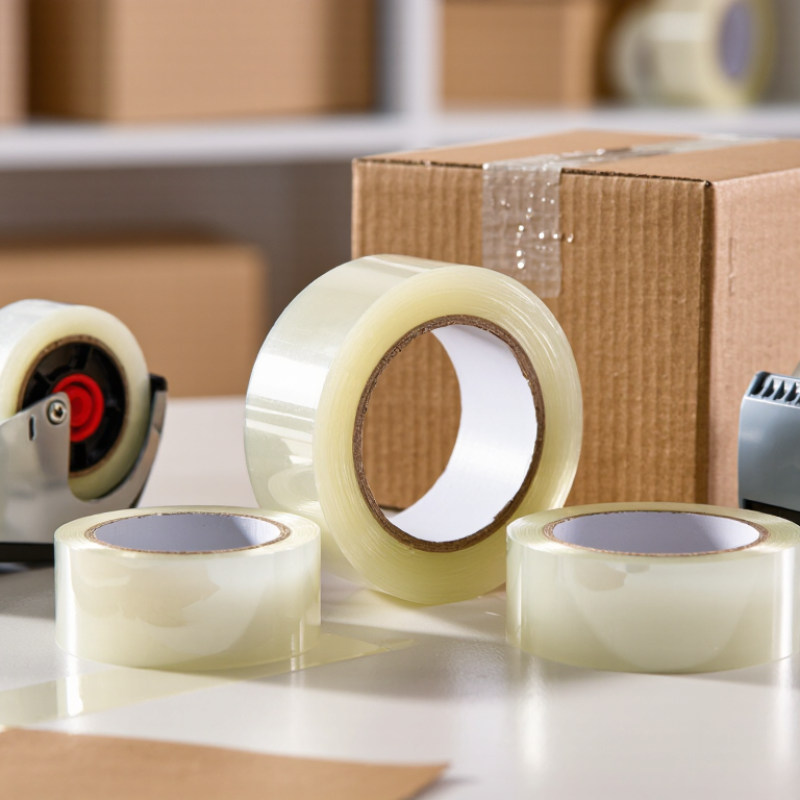
Clear tape selection starts with the carton, not the dispenser. Note its weight, seam length, recycled content, and storage time. Glossy or dusty surfaces may reduce contact, so test the tape on the actual box. Pitney Bowes’ 2024 Parcel Shipping Index reported 21.6 billion U.S. parcels in 2023. That is not a tape-failure rate, but it shows why reliable closure matters during frequent handling.
Map the shipping conditions. Will cartons face cold loading docks, humid storage, or rough transfers? Check the tape’s stated application-temperature range, unwind behavior, and adhesion data against your packing environment. ASTM D3330 provides a method for measuring peel adhesion of pressure-sensitive tape; it cannot predict a box’s full transit performance. Run a small trial using your carton, contents, and sealing pattern. Clear tape can preserve label visibility, but may also make a weak seam harder to notice. I may be over-focusing on the seam, yet it is easy to overlook during a rushed packing shift.
Tips: Store a few test cartons in the coldest expected area overnight. Check for lifted edges or open seams. Record tape width, strip count, and carton weight. Small notes help.

Clear packing tape is not one material with one predictable feel. Most shipping rolls use polypropylene film, which is light, flexible, and widely suited to everyday cartons. PVC film often feels quieter during unwinding and can be easier to handle by hand, though its performance varies by formulation. Adhesive choice matters just as much. Hot-melt adhesive usually grabs corrugated cardboard quickly, while acrylic adhesive often offers steadier performance during storage and temperature changes. Neither is automatically better for every parcel.
Thickness is commonly listed in mils or microns; check which unit the seller uses. A thicker film may resist splitting when a box has sharp edges, but it cannot compensate for dusty cardboard or a weak seal. That matters. For ordinary, clean cartons, a moderate thickness may be enough. Heavy boxes, rough handling, or cold storage call for testing tape on the actual carton surface. Press a short strip down firmly, then check whether the edges lift after a few minutes. I would not judge a roll by a single quick pull; that test can miss how it behaves after hours in transit. Temperature, carton texture, and how tightly the box is packed all change the result.
Compare common clear packing-tape constructions by their typical total thickness. The adhesive type can affect tack, aging, and performance in different temperatures.
Typical product ranges are approximate, not universal standards. Check the product specification for total thickness and adhesive type; thicker tape alone does not guarantee a better seal.
For most regular cartons, 48 mm clear tape is a practical starting width. It covers the center seam without excessive overhang. Wider 72 mm tape can help bridge broad seams or uneven flaps, but width alone cannot compensate for weak corrugated board. Check the carton’s weight, surface texture, and storage conditions before choosing. A snug fit matters more than a tidy-looking roll.
Application matters just as much. Center the tape over the top seam, press it down firmly, and extend it several centimeters over each edge. For heavier shipments, seal both top and bottom seams in an H pattern, covering the center and the two outer flap joins. A handheld dispenser helps maintain steady tension, though pulling too hard can stretch tape and invite lifting. A test carton is worth the small delay.
The U.S. Census Bureau estimated 2024 U.S. retail e-commerce sales at $1.1926 trillion, or 16.1% of total retail sales; shipping cartons remain a routine packaging need. That figure does not determine tape width, so test your own cartons instead. For technical comparisons, ASTM D3330 measures peel adhesion, while ASTM D3654 addresses shear adhesion. Neither standard selects an application pattern for you. There is no perfect width for every box. I’d still recheck adhesion after a cold night or a dusty packing shift.
Clear packing tape should keep labels readable without hiding the carton’s contents or print. Test a sample over the actual shipping label, then check it under bright warehouse lighting; glare can make even transparent tape hard to scan. Look for haze, bubbles, and yellowing after a short period in storage. Small details matter. Clear tape can also reveal uneven seams, so a neat application is part of the result.
Strength depends on the box, its weight, and handling—not just tape thickness. ASTM D3330 measures peel adhesion, while ASTM D3654 evaluates shear adhesion; these methods help compare performance, but neither guarantees a perfect fit for every carton. Test tape on your actual packaging, especially recycled corrugated board, whose rough or dusty surface may affect adhesion. The U.S. EPA’s 2018 materials-management report counted 82.2 million tons of containers and packaging in municipal solid waste, or 28.1% of the total. That figure is not tape-specific, but it is a reminder to avoid both failed seals and needless extra layers. I would still test a few boxes by hand. Real packing conditions can be messier than a lab bench.
| Tape Type | Typical Clarity | Common Total Thickness | Strength and Tack Profile | Packaging Compatibility | Best Fit | Points to Check |
|---|---|---|---|---|---|---|
| Acrylic adhesive on BOPP film | Usually clear; suited to applications where a transparent seal is wanted. | About 1.8–2.5 mil (46–64 μm), depending on the tape construction. | Generally builds adhesion over time. Often offers good resistance to aging and ultraviolet exposure compared with rubber-based adhesives. | Commonly used on clean, dry corrugated cartons. Initial adhesion can be less reliable on cold cartons or dusty surfaces unless the tape is specifically rated for those conditions. | Longer storage, clear presentation, and general carton sealing at suitable application temperatures. | Confirm application temperature, carton surface condition, and whether the seal must withstand prolonged heat or sunlight. |
| Hot-melt synthetic rubber adhesive on BOPP film | Often clear to slightly amber; appearance varies by adhesive formulation. | About 1.8–2.5 mil (46–64 μm), depending on the tape construction. | Typically provides quick tack and a strong initial bond, which can help the tape grip soon after application. | Often suitable for standard corrugated cartons, including some recycled or less-smooth board. Results depend on the carton’s recycled-fiber content, surface, and dust level. | Fast-paced carton sealing and shipments needing quick initial adhesion. | Check heat and aging requirements; rubber-based adhesives may be less suitable than acrylic for extended exposure to heat or sunlight. |
| Natural rubber adhesive on BOPP film | Can range from clear to amber-tinted. | About 1.9–2.8 mil (48–71 μm), depending on the tape construction. | Often offers high initial tack and can adhere well to a range of carton surfaces. Low-temperature performance depends on the specific formulation. | May suit cartons with varied surface characteristics. For cold rooms or cold cartons, use only a product rated for the actual application temperature. | Applications where immediate grab or adhesion to less-smooth carton surfaces is a priority. | Check color, residue requirements, temperature rating, and storage conditions; performance differs among formulations. |
| Clear PVC carton-sealing tape | Typically clear, with a smooth film appearance. | Thickness is product-specific; compare the stated total caliper on the product specification sheet. | Can provide a conformable, easy-to-handle seal. Holding performance depends on adhesive type and tape construction. | Used for carton sealing where PVC film properties or handling characteristics are preferred. Verify suitability for the carton surface and sealing equipment. | Specialized packing needs where film feel, conformability, or dispensing behavior matters. | Confirm compatibility with dispensers and local material-sorting or recycling requirements for the packaging stream. |
Selection note: Thickness alone does not determine seal strength. For reliable results, match the tape to carton weight, board condition, application temperature, storage duration, and sealing method. Common carton-sealing widths include approximately 48 mm and 72 mm; choose a width that fully covers the carton seam.
Choosing clear packing tape in 2026 means weighing more than the price printed on a case. For a busy packing station, compare cost per usable metre, not just cost per roll. Check the tape’s width, thickness, and adhesion on the cartons you actually ship. Recycled or dusty cardboard may need a different adhesive from clean, smooth boxes. A cheap roll that splits at the dispenser can slow the whole packing bench. Test first. Keep notes on jams, edge lift, and cartons opening after handling.
Availability matters too. Ask suppliers about lead times, case quantities, and whether the same specifications will remain available during seasonal peaks. Keeping one approved alternative can prevent last-minute substitutions, though extra stock ties up cash and shelf space. Environmental claims need scrutiny. Look for clear information on recycled content, packaging, and disposal guidance. Clear tape is not automatically easy to recycle; local facilities may handle tape and cardboard differently. Using only the length needed can reduce waste, but thicker tape is not automatically greener. I tend to favor convenient options, so I check whether that convenience creates extra waste. I would treat labels as a starting point, not proof.