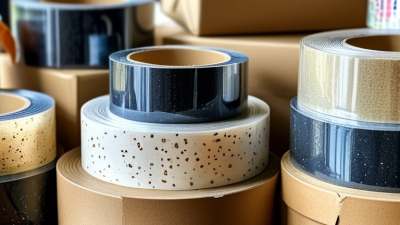
Global shipping rarely fails because a carton lacks tape. It fails when the tape, box, climate, and handling conditions disagree. Hot Melt Packing Tape is often chosen for its quick tack, smooth machine application, and reliable adhesion on common corrugated cartons. Yet “strong” is not a complete buying standard. A roll that performs well in a dry warehouse may struggle after hours in humid port storage. Small details matter.
This guide approaches tape selection from a practical shipping perspective. It considers carton weight, recycled fiber, surface dust, sealing speed, storage temperature, and transport distance. It also examines tape thickness, backing strength, adhesive performance, roll length, and dispenser compatibility. In real packing areas, operators notice what product sheets sometimes miss: noisy unwinding, split rolls, loose edges, and difficult starts. Those details cost time. Sometimes, they cause rework.
Testing should come before a large purchase. Seal representative cartons, then inspect them after stacking, vibration, temperature changes, and several days of storage. Record failures instead of relying on appearance alone. Ask suppliers for traceable specifications and application guidance. Independent test data can strengthen the decision, but it should match your actual packaging system. No tape choice is perfect. Warehouse trials often reveal that teams overvalue initial tack and overlook carton dust or recycled liners. That mistake is easy to repeat. A dependable selection balances performance, operator experience, supplier reliability, and total shipping risk. The following sections explain how to compare Hot Melt Packing Tape options with clearer evidence, fewer assumptions, and practical checks for international distribution.

Carton weight should guide the tape’s width, thickness, and adhesive strength. A light carton may need only a standard sealing tape, while a heavy box demands stronger holding power. I have seen overloaded cartons split even when the tape looked secure. Tape cannot repair weak corrugated board. Check the carton’s compression strength before selecting the closure. Test several strips on the actual carton surface, especially when recycled fibers create dust.
Climate can change performance dramatically. Humid warehouses may soften carton fibers and reduce bonding reliability. Hot containers can expose packages to prolonged heat, while cold routes may slow adhesive contact. Cold changes everything. Hot melt tape usually offers strong initial tack, but its usable temperature range depends on the formulation and application method. Apply it to clean, dry surfaces with firm pressure. A short conditioning test in warm and cold environments can reveal problems that a simple room-temperature trial misses.
Transit distance also affects the risk level. Long routes involve vibration, stacking, handling, and repeated temperature changes. For these shipments, evaluate peel strength, shear resistance, and carton closure after simulated transport. My earlier mistake was choosing tape by price alone. That decision created rework and damaged confidence. A better approach compares total packing cost, including failures, labor, and repacking time. Even then, testing is not perfect. Real shipping conditions can still surprise you.

How to Choose Hot Melt Packing Tape for Global Shipping?
Hot melt adhesive suits cartons moving through 0–40°C environments. It develops fast initial tack, helping the tape grip dusty corrugated flaps before they reopen. This matters during automated packing, where cartons may wait only seconds before stacking. UNCTAD’s Review of Maritime Transport 2024 notes that over 80% of global merchandise trade by volume moves by sea. Containers can face cool terminals, warm warehouses, and sudden temperature changes. Select tape tested across the full range, not only at room temperature. A carton sealed at 23°C may later experience condensation, vibration, or rough handling.
Check peel adhesion, tensile strength, elongation, and holding power. ASTM D3330 supports peel testing, while ASTM D3654 evaluates shear adhesion. Ask for results at 0°C, 23°C, and 40°C. Tape width and thickness also affect performance, especially on recycled corrugated board. More adhesive is not always better. Excessive tack can create messy application and difficult removal from equipment. I have seen cartons fail because the surface was dusty, not because the adhesive was weak. That detail is easy to miss.
For export packing, test the complete carton system. Include the actual board grade, closure method, and application speed. ISTA distribution testing can help assess vibration, shock, and atmospheric conditioning. Fast initial tack improves line efficiency, but it cannot repair crushed flaps or poor compression. A practical trial should include overnight storage and repeated temperature changes. Forty degrees is a working limit, not a promise.
Choose hot melt adhesive for 0–40°C application and fast initial tack
| Selection Dimension | Recommended Specification | Why It Matters in Global Shipping | Practical Check |
|---|---|---|---|
| Adhesive technology | Synthetic rubber hot melt | Hot melt adhesive generally provides fast wet-out and rapid initial tack, helping cartons close efficiently on manual or automated packing lines. | Confirm that the product is designed for carton sealing and that the adhesive remains compatible with the planned packaging materials. |
| Application temperature | 0–40°C | This range covers many warehouse, fulfillment, and loading conditions. Tape performance can change when the carton or tape is colder or hotter than the surrounding air. | Condition tape and cartons at the actual packing temperature before use. Avoid applying to frozen, wet, dusty, or heavily contaminated surfaces. |
| Initial tack | Fast initial tack | High early grab helps the tape bond quickly to corrugated board and reduces the risk of carton flaps reopening immediately after sealing. | After application, press the tape firmly along the center seam and both edges. Test the bond after the actual dwell time used on the packing line. |
| Backing film | Biaxially oriented polypropylene (BOPP) | BOPP is widely used for carton-sealing tape because it offers good tensile strength, dimensional stability, and resistance to handling during transport. | Choose a film thickness and construction suitable for the carton size, closure method, and expected handling severity. |
| Typical tape width | 48–50 mm | This width is commonly used for general carton sealing and provides practical coverage over a standard corrugated-box seam. | Verify compatibility with the tape dispenser or case sealer, especially where the equipment is configured for a fixed roll width. |
| Typical tape length | 50–100 m per roll for hand application | Roll length affects operator changeover frequency, storage efficiency, and the total number of rolls required for a shipment program. | Match the roll length to dispenser capacity and daily packing volume. Longer rolls may require stronger cores or specialized equipment. |
| Substrate compatibility | Clean, dry corrugated cardboard | Corrugated board contains porous paper fibers, so surface dust, recycled-fiber variation, coatings, and moisture can influence adhesion. | Run peel and carton-opening checks on every major board grade, including recycled, coated, printed, or low-surface-energy cartons. |
| Carton closure | Center-seam sealing with adequate flap contact | Adhesive alone cannot compensate for poorly aligned flaps, excessive carton fill, crushed edges, or insufficient contact area. | Keep the seam centered, remove loose dust, and apply consistent pressure along the full tape path. |
| Cold-chain or winter exposure | Use only after low-temperature validation | Hot melt tape selected for 0–40°C application should not automatically be treated as a low-temperature or frozen-surface solution. | Test the complete packed carton after conditioning at the lowest expected temperature and during temperature transitions. |
| Hot-weather exposure | Validate storage and transport temperatures above 40°C | High temperatures may soften adhesive and affect shear holding power, edge lifting, or roll handling. | Review the supplier’s technical data and conduct a heated-carton test using the actual board, tape width, and load. |
| Heavy or high-value cartons | Use reinforced tape or an additional closure method when required | Carton weight, drop impact, vibration, and stacking load may exceed the practical capability of standard carton-sealing tape. | Confirm box compression, drop, vibration, and seal-integrity requirements before selecting the final tape construction. |
| Long-distance transport | Prioritize balanced adhesion, tensile strength, and edge-holding performance | International shipments can experience repeated handling, vibration, humidity changes, and long storage periods. | Evaluate sealed cartons after simulated transport conditions rather than relying only on a quick hand-peel test. |
| Storage before use | Clean, dry indoor storage away from direct sunlight and heat sources | Improper storage can age the adhesive, deform rolls, and reduce consistent unwinding or bonding performance. | Keep rolls in their original packaging where possible and follow the supplier’s stated storage temperature and shelf-life guidance. |
| Quality-control tests | Initial tack, peel adhesion, tensile strength, holding power, unwind, and carton-seal integrity | A single test does not represent all shipping risks. A balanced test set helps identify failures caused by temperature, board type, or handling. | Test representative cartons with the intended application equipment and record results by board grade, temperature, and dwell time. |
| Best overall choice | Hot melt carton-sealing tape with fast initial tack, suitable for 0–40°C application, and validated on the actual carton | This combination supports efficient sealing while addressing common warehouse and distribution conditions. | Approve the tape only after production-line trials and simulated shipping tests confirm seal integrity. |
Performance values and recommendations are typical selection guidance, not a substitute for product-specific technical data or shipment testing. Final tape selection should consider carton construction, package weight, application method, temperature history, humidity, and transport conditions.
Choosing hot melt packing tape starts with the carton, not the tape dispenser. A 45–65 μm film offers a practical balance between flexibility and tear resistance. Lighter film can reduce material use, but it may stretch around rough edges. Thicker film feels stronger, yet it can increase cost and waste. The correct choice depends on carton weight, surface texture, and handling distance.
Width also affects sealing reliability. For many export cartons, 48–72 mm tape provides enough coverage across the center seam. Narrow tape may leave weak edges on oversized boxes.
Wider tape can improve contact, but it may not fit every automatic or handheld dispenser. Measure the equipment before ordering. Small details matter.
A 3-inch core is widely used with commercial packing tools and supports smooth unwinding. Check the core diameter, roll length, and adhesive coating together. Hot melt adhesive usually delivers quick tack, which helps when cartons move rapidly through a packing line.
However, quick tack does not solve dusty, damp, or poorly closed flaps. Clean surfaces and firm pressure still matter. A simple trial with filled cartons can expose problems before shipment.
Some cartons pass that test, then fail after repeated handling. That possibility deserves attention.
Hot melt packing tape should be selected through testing, not appearance alone. A strong-looking roll may still fail on dusty cartons or recycled board. ASTM D5486 helps evaluate pressure-sensitive packaging tape for box closure performance. Check adhesion, backing quality, and holding strength under controlled conditions. These results reveal whether the tape can maintain a sealed carton during handling.
ASTM D1000 is widely associated with pressure-sensitive tape testing. Some methods can help assess tensile strength, elongation, and adhesive behavior when they fit the tape construction. However, D1000 is not a complete shipping qualification. The test setup must match the tape’s actual use. A laboratory result can look excellent, yet cold storage may expose a weakness.
Tips: Test the exact carton surface, tape width, and application pressure. Record failures, not only successful samples. Then use ISTA 3A testing to simulate parcel shipping, including vibration, drops, compression, and repeated handling. Watch for lifted edges, split seams, and adhesive transfer. Real shipments are rarely tidy. That matters. A useful test plan combines ASTM D5486, applicable ASTM D1000 methods, and ISTA 3A results. Review the evidence before choosing a tape for long-distance delivery.
Hot melt tape can seal cartons quickly, but export compliance needs equal attention. Check the adhesive and backing against REACH requirements for restricted substances. RoHS may also matter when tape is used with electrical products or regulated components. Do not assume RoHS applies automatically. Confirm the destination market and product category.
Request a current declaration of conformity, test reports, and batch traceability from the supplier. ISO 9001 certification shows controlled quality processes, but it does not prove every shipment meets REACH or RoHS. That distinction is often missed. During real packaging checks, I would compare the tape specification with the purchase order and retain samples from each batch. A small documentation gap can delay customs clearance.
Tips: Check carton labels before production. Include country of origin, handling instructions, package quantity, and required material marks. Use the destination country’s language rules where applicable. Confirm whether recycling symbols or packaging declarations are mandatory. Keep label artwork, compliance files, and inspection records together. Requirements change, and older templates can become unreliable. A practical trial also helps: test adhesion on corrugated cartons after cold storage, heat exposure, and rough handling. Perfect laboratory results may not reflect a wet loading dock.