Sticky tape can leave a gummy film on glass, painted walls, plastic, metal, or wood. Clear Sticky Tape residue carefully, because the wrong solvent or too much scraping can dull a finish or lift paint. The best approach depends on the surface, the adhesive, and how long the tape has been stuck. There is no single cleaner that suits everything.
Start gently. Peel away loose tape, then soften the residue with warm, soapy water and a soft cloth when the surface can tolerate moisture. On glass or metal, a little cooking oil or an adhesive remover may help; test it on a hidden spot first. Wait a few minutes, then wipe without pressing hard. A plastic card can lift softened residue more safely than a knife. Small steps matter.
Some surfaces need extra caution. Painted walls may mark easily, while unfinished wood can absorb oil or water. Check product labels and the manufacturer’s care instructions before applying any remover. Ventilate the room, keep cleaners away from children and pets, and never mix cleaning products. If the finish changes, stop. That part is easy to miss. A stubborn patch may need more time, not more force, and some residue is better left for a professional than removed at the cost of the surface. The methods below explain how to choose a practical option, test it, and clean up without turning a sticky spot into a larger repair.
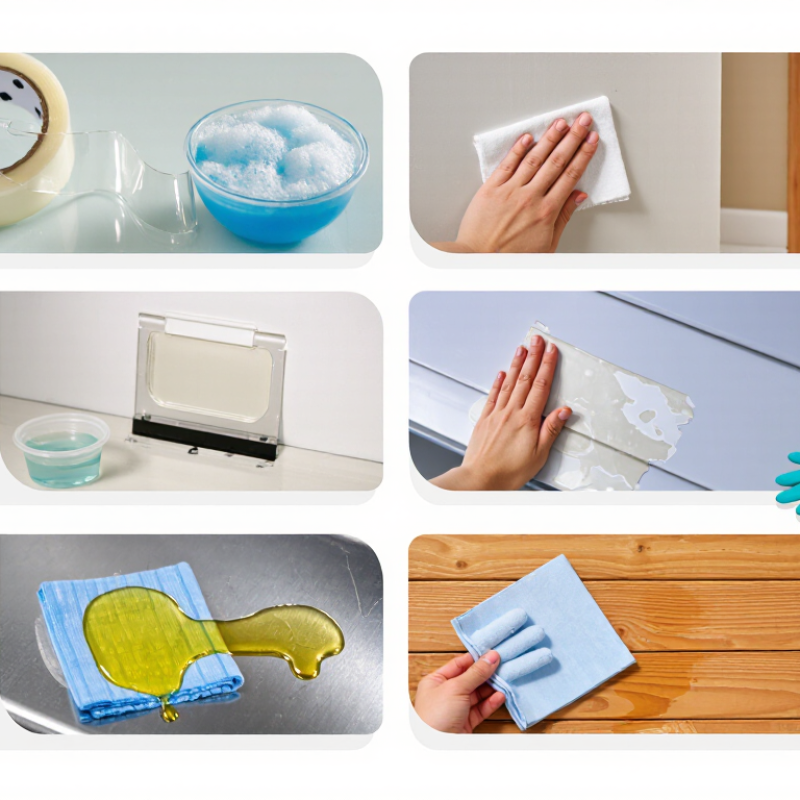
Sticky tape residue behaves differently on glass, painted drywall, unfinished wood, and plastic. Identify the surface before choosing a remover. A glossy tile may tolerate gentle rubbing, while paint can lift with the adhesive. Wood finishes may absorb oils, and some plastics can cloud after solvent contact. Start with a fingernail or plastic scraper, keeping it nearly flat. Then test a small amount of mild dish-soap solution in a hidden spot. Wait several minutes and check for discoloration, softening, or a change in sheen. Small test. It is easy to skip this step; I would not.
Tips: Use a white cloth so color transfer is visible. Blot rather than scrub, and stop if the finish changes. For tougher residue, try a little cooking oil only after the patch test, then wash the area with soap and water. Avoid assuming that one method suits every surface.
For solvent safety, consult the NIOSH Pocket Guide to Chemical Hazards: it reports acetone’s flash point at about 0°F (−18°C), indicating that its vapors can ignite readily near ordinary indoor conditions. That figure is a reminder to avoid casual solvent use, especially near heat or flames. NIOSH data does not determine whether acetone is safe for a specific finish; the surface maker’s care guidance and a hidden-area test matter more. Adhesive residue can be stubborn, and patience is not always satisfying. Still, a slow, mild approach is less likely to turn a small sticky patch into a larger repair.

Start by lifting a loose tape edge with your fingernail or a plastic card. Pull slowly, keeping the tape close to the surface instead of yanking upward. A sharp pull can tear paper, lift paint, or leave more adhesive behind. If the tape feels stuck, pause and warm it briefly with a hair dryer on low. Keep the airflow moving and check the surface often, especially on finished wood or plastic. Gentle is better.
Once the tape is off, rub the residue with a clean finger or soft cloth. Small rolls of adhesive often come away this way. For stubborn spots, dampen a cloth with warm, soapy water and hold it against the residue for a minute before wiping. Test first in a hidden area. Some finishes react in ways you may not expect. I sometimes reach for a scraper too quickly; that can leave a faint mark that is harder to fix than the sticky patch.
How to Clear Sticky Tape Residue from Any Surface?
Choose a Safe Cleaner for the Surface
The safest cleaner depends on both the residue and the surface beneath it. Start with warm water and a drop of mild dish soap, applied to a soft cloth. Press the damp cloth against the sticky patch for a minute, then rub gently. Avoid soaking wood seams, paper labels, or unsealed stone. A glossy finish can still scratch. Test any stronger cleaner on a hidden spot and wait until it dries.
Tape adhesives differ, so one solvent will not suit every job. ASTM International’s D3330/D3330M peel-adhesion test measures how strongly pressure-sensitive tape sticks to a standard panel. It does not prescribe a residue cleaner, but it helps explain why tape type and surface affect removal. For glass or metal, a little isopropyl alcohol may help; check the surface maker’s care guidance first. Keep it away from painted finishes, some plastics, and delicate coatings unless compatibility is confirmed. Work with ventilation, and never mix cleaners.
Tips: Lift softened residue with a plastic card, not a knife. Use light pressure. If the surface turns cloudy, feels tacky, or loses color, stop and wipe with clean water. Honestly, waiting longer is not always better; a cleaner can damage a finish before the adhesive budges. Dry the area and reassess before trying another method.
| Surface | Safer First Choice | How to Remove the Residue | Use Caution |
|---|---|---|---|
| Glass | Warm, soapy water; a glass-safe adhesive remover can be considered for stubborn residue. | Soak a cloth in warm, soapy water and hold it against the residue for a few minutes. Wipe gently, then rinse and dry. | Keep liquids away from window edges and nearby wood. Use a plastic scraper rather than a metal blade to reduce scratch risk. |
| Glazed ceramic tile | Warm water with mild dish soap. | Apply with a soft cloth, let the residue soften, and rub gently. Rinse the area and dry it. | Avoid abrasive pads, which may scratch the glaze or damage grout. Test any stronger cleaner in an inconspicuous spot. |
| Stainless steel | Warm soapy water and a soft microfiber cloth. | Wipe gently in the direction of the surface grain, then rinse with clean water and dry thoroughly. | Avoid steel wool, scouring powders, and chlorine bleach, which can scratch or damage the finish. |
| Painted wall | A barely damp cloth with mild soap, tested first in a hidden area. | Dab rather than scrub. Use light pressure and stop if paint transfers to the cloth or the finish changes. | Solvents and vigorous rubbing can soften paint or remove its sheen. Do not saturate drywall or unsealed surfaces. |
| Finished wood | A soft cloth lightly dampened with water and mild soap, after a spot test. | Wipe gently and dry immediately. For persistent residue, use only a cleaner labeled safe for that specific finish. | Excess water can damage wood or its finish. Avoid soaking, abrasive tools, and untested solvents. |
| Unfinished wood | Dry removal with fingers or a soft plastic edge. | Roll or lift the adhesive carefully without wetting the wood. If residue remains, seek advice appropriate to the wood and intended finish. | Water and oily cleaners can soak into unfinished wood and leave stains. Test any treatment on an unseen area first. |
| Hard plastic | Warm soapy water; a plastic-safe adhesive remover only if needed. | Soften the residue with a damp cloth, then rub gently with a soft cloth or plastic scraper. Rinse and dry. | Some solvents, including acetone, can cloud, soften, or crack certain plastics. Check the surface-care instructions before using a remover. |
| Fabric | Cool water and a small amount of liquid laundry detergent, if the care label permits. | Lift or gently scrape away excess adhesive. Blot from the back of the fabric, rinse, and wash according to the care label. | Do not put the item in a dryer until the residue is gone; heat can make some adhesive stains harder to remove. Test cleaners on a hidden seam. |
| Leather | A dry, soft cloth; use a leather-specific cleaner only when its instructions allow. | Gently roll or lift the residue without scraping. Follow the leather-care instructions and dry naturally. | Water, alcohol, and general-purpose solvents may stain or dry out leather. Test any cleaner in an inconspicuous area. |
General safety: Start with the mildest method, test cleaners on an inconspicuous area, and follow the surface and cleaner instructions. Never mix cleaning products, and ventilate the area when using a chemical cleaner.
How to Clear Sticky Tape Residue from Any Surface?
Dissolve and Wipe Away the Sticky Residue
Tape residue often yields to a little patience and the right solvent. Start by lifting loose adhesive with a fingernail or a plastic scraper. Avoid metal blades; they can leave scratches, especially on painted wood or plastic. Dampen a soft cloth with warm, soapy water and hold it against the sticky patch for a minute. Then rub gently in small circles. It may take several passes. That’s normal.
If the residue remains, test a small amount of rubbing alcohol or cooking oil on a hidden spot first. Wait a few minutes and check for dullness, color transfer, or swelling. Apply the chosen liquid to a cloth, not directly to the surface, and press it onto the adhesive. Let it sit briefly, then wipe from the edges toward the center. On glass or glazed tile, alcohol can work well; on delicate finishes, use soapy water instead. I’ve found that rushing this part can spread the glue into a wider, annoying film.
Tips: Use a clean section of cloth as the adhesive lifts. Wipe away any oily film with warm, soapy water, then dry the area. Keep liquids away from unsealed wood, screens, and painted finishes unless the care instructions say they are safe. When unsure, stop and test again.
Rinse the cleaned area with a small amount of lukewarm water and mild detergent, unless the surface instructions say otherwise. Use a soft cloth, not an abrasive pad. On painted wood or a phone screen, excess water can cause more trouble than the adhesive. Keep the cloth damp, then wipe away loosened residue with light strokes. Rinse the cloth often so softened glue does not spread into a wider, shiny smear. A small patch may need another pass.
Dry the area with a clean, lint-free towel. Let it air-dry briefly, too. Check under angled light; a thin adhesive film can look clear when wet, then catch dust once dry. Feel gently with a fingertip. Still tacky? Repeat the mild wash rather than scraping. ASTM International’s ASTM D3330/D3330M standard evaluates pressure-sensitive tape peel adhesion under controlled test conditions, including a 300 mm/min test rate. That is a laboratory measure, not a household cleanup guarantee, but it explains why residue can persist after the visible tape is gone. Check again after drying. I sometimes rush this part, and miss a faint edge. On unfinished wood, fabric, or delicate coatings, stop if color or finish transfers to the cloth. Test any cleaning solution in a hidden spot first.