
Buying Duct Tape across international markets is not as simple as comparing roll prices. A roll may look identical in a product photo, yet its adhesive, backing, thickness, and holding strength can differ greatly. Global buyers must examine performance, documentation, packaging, and supplier reliability before placing a large order.
This guide presents ten practical buying tips based on common procurement experience and quality-control principles. It explains how to define the application, select suitable materials, check width and length, request samples, and evaluate carton protection. Temperature resistance matters in a cold warehouse. Moisture resistance matters during ocean transport. A clean tear may also matter more than a low unit cost.
Small details count.
Buyers should also review technical data sheets, test reports, production capacity, minimum order quantities, and agreed inspection methods. Supplier communication deserves attention. Clear specifications reduce misunderstandings between factories, agents, and importers. However, no checklist removes every risk. A sample can perform well while a later batch shows variation, especially when production controls are weak. That possibility is easy to overlook.
Responsible sourcing includes checking product suitability, truthful labeling, safe handling information, and applicable import requirements in the destination market. Pricing should be compared with total landed cost, not only the factory quotation. Freight, protective packaging, inspections, delays, and rejected goods can change the final result. With careful questions and documented decisions, buyers can choose Duct Tape that performs consistently and supports dependable international supply.
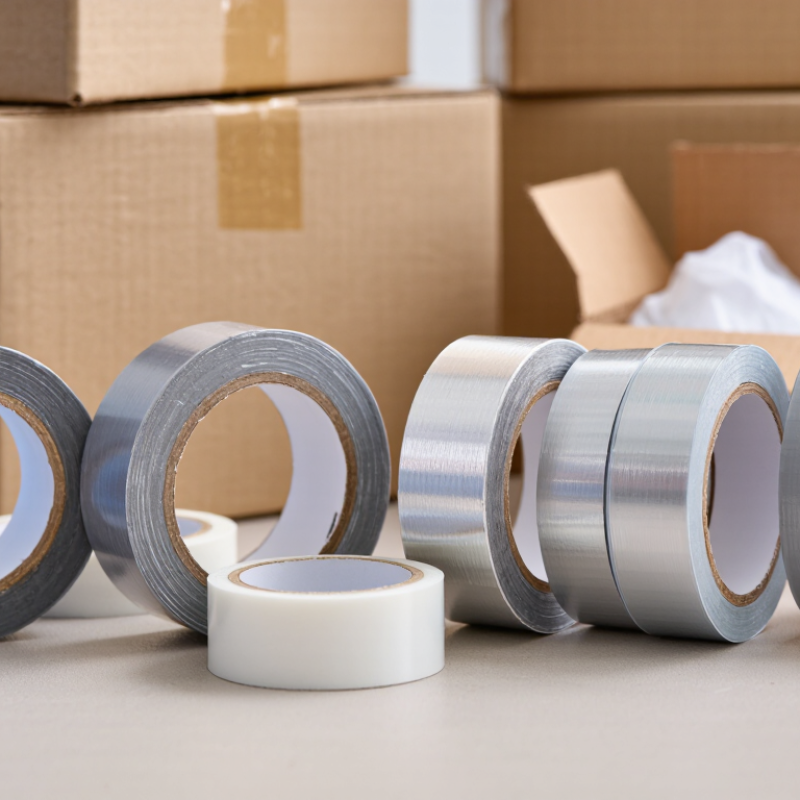
When global buyers assess duct tape, the backing deserves close attention. It controls flexibility, tear resistance, and surface conformity. A fabric-backed tape may wrap uneven cartons better than a smooth film-backed tape. Check thickness, weave density, and coating consistency across the roll. Small wrinkles can reveal production instability.
The adhesive must match the application and storage environment. Rubber-based adhesive often provides quick grab, while acrylic systems may perform better under heat and aging. Request peel data on the actual surface, not only on stainless steel. Peel strength can change sharply on dusty cardboard, painted metal, or low-energy plastic. Test at the planned application temperature. Cold warehouses expose weak adhesion quickly.
Tensile strength shows how much pulling force the tape can withstand. It does not prove easy removal or reliable sealing. Elongation explains how far the tape stretches before breaking. High elongation helps with curved surfaces, but excessive stretch can make clean application difficult. I have seen buyers select strong tape that still split during hand tearing. The specification looked excellent. The handling was poor.
Ask for test conditions, sample age, and batch records. Compare several production lots when the purchase volume is large. Keep a few rolls for field checks after transport and storage. This step is easy to skip, especially under deadline pressure. It should not be. A buyer’s checklist may need revision after real use.

Duct Tape Fundamentals: Backing, Adhesive, Peel, Tensile, and Elongation
Duct tape buying decisions should begin with measurable performance targets, not attractive packaging. ASTM D3330 helps compare peel adhesion, showing how firmly tape bonds to a defined surface. Ask for test results with the exact backing, adhesive type, surface material, and peel angle. A stronger number is not always better for every application.
ASTM D3759 evaluates tensile strength and elongation. These figures reveal how the tape behaves when pulled across a carton, pipe, or temporary repair. Specify the required width and testing direction. ASTM D3654 measures holding power under a sustained load. This matters when tape supports a label, seals a joint, or remains under tension for hours. Review test temperature, humidity, load, and test duration. Small changes can alter the result.
I have seen buyers compare numbers from different laboratories as if they were identical. They are not. Request complete test conditions, sample age, and production-lot information. Keep sealed samples for your own verification. A short trial on dusty warehouse cartons may expose failures hidden in a clean laboratory. Targets should include minimum peel adhesion, tensile strength, and holding time. Leave a safety margin, but avoid paying for unused performance. The data may look precise. Your application is not.
| No. | Buying Tip | Performance Target | ASTM Test Method | Practical Benchmark Band* | Buyer Acceptance Check | Procurement Action |
|---|---|---|---|---|---|---|
| 1 | Define the primary application Separate carton sealing, bundling, temporary repair, insulation, and outdoor use before comparing quotations. |
Set different minimum values for adhesion, tensile strength, elongation, and holding power according to the end use. | ASTM D3330 for peel adhesion; ASTM D3759 for breaking strength and elongation; ASTM D3654 for holding power. |
No universal ASTM pass level exists. A written application-specific specification is required. | Confirm substrate, surface condition, temperature range, exposure time, and removal requirement. | Reject offers with no defined end-use specification. |
| 2 | Set a peel-adhesion target Use peel data to compare initial bonding strength on the intended surface. |
For general packaging and bundling, specify a minimum 180° peel adhesion value on the agreed test panel. | ASTM D3330 180° peel adhesion of pressure-sensitive tape; report the applicable method, panel, dwell time, and peel rate. |
Typical duct-tape-type products may commonly fall around 20–80 oz/in (approximately 2.2–8.8 N/25 mm), depending on construction and test conditions. | Test on the actual carton, film, metal, plastic, or painted surface when possible. | Specify a minimum value rather than accepting “high adhesion” as a description. |
| 3 | Check adhesion after dwell time Initial peel results may not represent performance after the tape has remained applied. |
Require both immediate and post-dwell peel measurements if the tape will remain bonded for several hours or days. | ASTM D3330, with the specified dwell time clearly recorded before peeling. | Use the same panel preparation, application pressure, dwell time, temperature, and peel rate for every supplier sample. | Compare the percentage change between initial and post-dwell peel values. | Add a maximum allowable adhesion loss to the purchase specification. |
| 4 | Specify tensile strength by tape width Do not compare total force from rolls with different widths. |
Set a minimum breaking strength in force per unit width for bundling and reinforcement applications. | ASTM D3759 Breaking strength of pressure-sensitive tape; report specimen width and direction. |
A practical comparison range for many general-purpose duct-tape constructions is approximately 15–30 lbf/in (about 2.6–5.3 kN/m), subject to product design and test setup. | Check whether the reported value is machine direction, cross direction, or both. | Purchase against normalized force per unit width. |
| 5 | Use elongation to match handling needs High elongation can improve conformability, while lower elongation can support controlled wrapping. |
Define an elongation range rather than evaluating tensile strength alone. | ASTM D3759 Report elongation at break together with breaking strength. |
Many general-purpose duct-tape constructions may show approximately 10–25% elongation at break; specialized constructions can differ substantially. | Check stretch during dispensing, hand tearing, wrapping, and application over irregular surfaces. | Select a range suitable for the application instead of choosing the highest percentage. |
| 6 | Evaluate holding power under load Holding power is essential for hanging, splicing, bundling, and vertical applications. |
Set a minimum time to failure or a maximum displacement under a defined load. | ASTM D3654 Holding power of pressure-sensitive tapes; report load, test area, temperature, and failure criterion. |
For comparison only, procurement programs often establish application-specific limits such as at least 24 hours under a defined load; this is not an ASTM universal requirement. | Use the actual load per tape width and test at the intended service temperature. | Require the complete test condition, not only a holding-time number. |
| 7 | Control test conditions across suppliers Temperature, humidity, panel material, and application pressure can materially affect results. |
Use one harmonized laboratory protocol for all supplier samples. | ASTM D3330, D3759, and D3654, applied with the same selected procedure and conditioning requirements. | Do not rank products using values generated under different temperatures, dwell times, loads, or substrate conditions. | Request raw test conditions and specimen dimensions with every report. | Make test-condition compliance a bid requirement. |
| 8 | Specify minimum and maximum limits One-sided targets may overlook excessive stretch, residue, or difficult removal. |
Use minimum limits for adhesion, tensile strength, and holding power; use an acceptable range for elongation where necessary. | ASTM D3330, ASTM D3759, and ASTM D3654 for the relevant performance attributes. | Example specification structure: peel adhesion ≥ agreed minimum; tensile strength ≥ agreed minimum; holding power ≥ agreed time; elongation within the agreed range. | Review both average values and variation between tested specimens. | Include batch-to-batch consistency requirements. |
| 9 | Verify sample-to-production consistency Qualification samples may not represent later production lots. |
Require lot testing or periodic verification against the approved performance window. | Repeat ASTM D3330, D3759, and D3654 testing on production samples at an agreed frequency. | Use the approved sample mean and allowable variation as the internal reference, rather than relying on a single test result. | Compare certificate data with independent incoming inspection results. | Add a corrective-action process for out-of-specification lots. |
| 10 | Document a complete global purchasing specification Clear technical language reduces disputes between regions, factories, and inspection teams. |
Record test method, selected procedure, units, conditioning, substrate, sample width, load, dwell time, and acceptance limits. | ASTM D3330, ASTM D3759, and ASTM D3654, with the exact applicable procedure identified. | Use consistent units: oz/in or N/25 mm for peel; lbf/in or kN/m for tensile strength; percent for elongation; hours or minutes for holding power. | Ensure supplier reports use the same unit system and conversion basis. | Approve only specifications that can be independently reproduced. |
*Technical note: ASTM D3330, ASTM D3759, and ASTM D3654 define test methods and reporting practices; they do not establish one universal performance grade for all duct tapes. The benchmark bands above are practical comparison ranges and example procurement structures. Final acceptance limits should be validated for the intended substrate, temperature, load, dwell time, and service environment.
Global buyers often compare duct tape by width, color, and price. The adhesive grade deserves closer attention. Temperature, moisture, surface texture, and application force can change performance within hours. A tape suitable for a dry warehouse may fail on a cold loading dock.
Start by matching the grade to the working temperature, not the shipping temperature. Cold conditions can reduce initial adhesion. High heat may soften the adhesive and leave residue. Humid environments require strong moisture resistance, especially on cartons, metal, and outdoor equipment. Test the tape after exposure, not immediately after application. Allow time for the adhesive to build contact.
Surface condition matters just as much. Dusty concrete, recycled cardboard, painted steel, and rough plastic need different adhesion levels. Clean, dry surfaces give more reliable results. Rough surfaces may need a thicker backing that can bridge small gaps. For temporary bundling, easy removal may matter more than maximum strength. For repairs, tear resistance and conformability become critical.
Ask suppliers for temperature ranges, adhesion data, backing construction, and storage guidance. Request samples from the same production specification. A small trial can reveal edge lifting, residue, or weak unwinding. Do not trust a laboratory number alone. Real surfaces are less cooperative. A perfect specification is rare, and even experienced buyers should question results that seem unusually strong. Record application pressure, dwell time, and weather conditions for fair comparison.
Global buyers should compare more than the unit price. Start with width and roll length, because a 48 mm roll may not match a 50 mm dispenser. Confirm the actual adhesive length, not only the printed label. Ask for thickness, tensile strength, elongation, and temperature performance. Small differences matter during pallet packing, repairs, and outdoor storage. Request samples from the same production specification. A sample from another batch can mislead your decision.
Packaging affects handling and landed cost. Compare individual wrapping, inner cartons, carton dimensions, and pallet patterns. Excess packaging raises freight charges and creates unnecessary waste. Weak cartons may arrive crushed after a long sea journey. Check whether rolls can tolerate humidity and temperature changes. Also review the MOQ and price breaks. A low price may require more inventory than your warehouse can safely hold. We learned this the hard way.
Lead time should include production, inspection, booking, and customs clearance. Ask suppliers to separate each stage in writing. Then calculate landed cost: product price, packaging, inland transport, freight, insurance, duties, and local delivery. Exchange-rate movement can change the result. Leave a practical buffer for delays. Our first forecast was too optimistic. Rechecking port schedules and carton measurements prevented a costly surprise. Get the details confirmed.
Global duct tape buying starts with supplier verification, not a low quotation. In supplier audits, request the current ISO 9001 certificate, issuing body, scope, and expiry date. Check whether the certified site actually produces your tape. A certificate alone is not proof.
Review controls for adhesive mixing, coating weight, curing, slitting, and final inspection. Ask for batch records and calibration logs. Small gaps matter. Compliance should match the destination market and the tape’s end use. Request material declarations, safety data, restricted-substance results, and packaging details. Do not accept generic files without product references. Confirm labels, carton markings, and import documents before production.
Incoterms must appear beside the named place, such as FOB Ningbo or DAP Berlin. Clarify freight, insurance, duties, unloading, and customs clearance. A vague “door delivery” promise creates expensive surprises. I have seen buyers compare prices before comparing responsibilities.
Order samples from the intended production process, not only hand-cut laboratory pieces. Test adhesion on painted metal, cardboard, and dusty surfaces. Measure peel strength, tensile strength, unwind behavior, residue, and aging after heat and humidity exposure. Record results with photographs. Ask for two batches when consistency matters. One sample can flatter a weak process.
My own review checklist once missed carton compression, and damaged rolls reached the warehouse. That mistake changed how I audit packaging. Keep approval tied to specifications, batch traceability, and corrective actions.