Leave Your Message
-
Phone
-
Email
-
Whatsapp

Cello Tape is a small product with a surprisingly large role in packaging, stationery, and everyday operations. A weak roll can split, unwind unevenly, or leave residue on a carton. For global buyers, choosing a manufacturer involves more than comparing quoted prices. Adhesive consistency, backing material, roll dimensions, packaging quality, and dependable communication all affect the final result.
This guide to China’s top 10 Cello Tape manufacturers offers a practical starting point for evaluating potential suppliers. It considers product range, manufacturing capabilities, customization options, quality controls, and export experience where reliable information is available. Buyers should also request current specifications, samples, and clear details about minimum order quantities and lead times. Small tests can reveal issues that a catalog may not show. Details matter.
A supplier’s website or sales claim alone cannot confirm performance. Compare samples under your own storage and application conditions, and clarify how defects or specification changes are handled. Needs differ. A distributor may value flexible packaging and mixed orders, while a high-volume buyer may prioritize stable output and repeatable quality. No ranking can replace direct verification, and “top” should not mean the same thing for every purchaser. The companies featured here can help narrow the search, but careful checks remain essential before a long-term commitment.
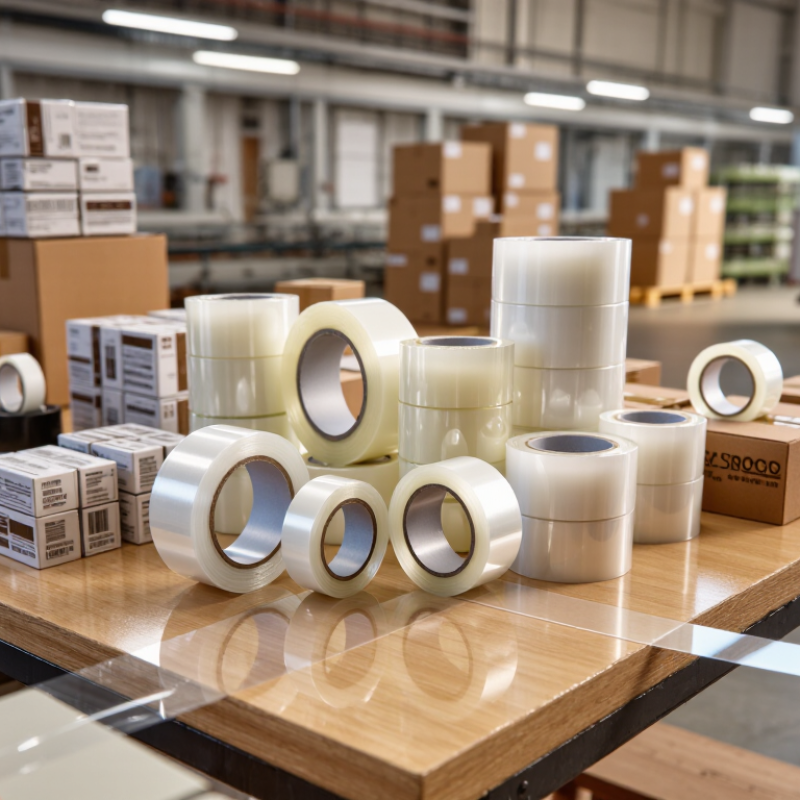
For global buyers, understanding cello tape starts with its backing film. Most packaging tape uses BOPP, or biaxially oriented polypropylene, a thin film stretched for strength and clarity. It resists tearing during ordinary carton sealing and keeps the tape lightweight. Look closely at a roll: film thickness, stretch, and transparency can affect how it handles on a dispenser. Small differences matter.
Adhesive choice changes performance. Water-based acrylic adhesive often suits general carton sealing and offers steady aging performance. Hot-melt adhesive can provide quick initial tack, useful when cartons move soon after sealing. Rubber-based adhesives may bond well to varied surfaces, but heat and storage conditions deserve attention. No adhesive is best for every job. Ask suppliers for adhesion, unwind, and temperature test results on the intended carton surface.
Roll formats also shape purchasing decisions. Common options include narrow office rolls, wider packing rolls, and large jumbo rolls for converting. Width, length, core diameter, and roll outside diameter should match the dispenser or converting line. A longer roll may reduce changeovers, but it can be harder to handle. One sourcing detail is easy to miss: stated length and thickness should be verified consistently, since measurement methods can vary. Sample testing is still worthwhile. Industry specifications rarely capture every warehouse condition.
This buyer’s guide summarizes common cello-tape constructions and formats rather than ranking or naming manufacturers. “Cello tape” is used differently across markets; many clear stationery and carton-sealing tapes are made with BOPP (biaxially oriented polypropylene) film, while traditional cellophane tape uses regenerated cellulose. Specifications vary by product and supplier.
| Product / Construction | Backing Material | Typical Adhesive | Common Roll Formats | Typical Use | Buyer Checks |
|---|---|---|---|---|---|
| Clear stationery tape | Usually thin polypropylene film; some products use regenerated cellulose | Acrylic or rubber-based pressure-sensitive adhesive | Common widths include about 12–24 mm; short desk rolls are widely available | Paper repairs, gift wrapping, and light office tasks | Confirm the backing material, clarity, unwind behavior, and dispenser compatibility. |
| General-purpose BOPP packaging tape | BOPP film | Water-based acrylic or hot-melt rubber adhesive | Widths commonly include about 45–50 mm; roll lengths vary by market and application | Closing cartons for storage and shipping | Check total tape thickness, adhesion to the carton surface, and performance at the intended temperature. |
| Wide carton-sealing tape | BOPP film, commonly supplied in wider formats | Water-based acrylic or hot-melt rubber adhesive | Common widths include about 60–72 mm; machine rolls may be longer than hand rolls | Sealing larger cartons or covering wider seams | Match the roll width and core size to the sealing equipment or hand dispenser. |
| Low-noise packaging tape | Typically BOPP film with a release-treated surface | Often acrylic, formulated for controlled unwinding | Common carton-tape widths, often around 45–50 mm | Carton sealing where quieter manual application is preferred | Ask for unwind-noise test conditions; noise can change with speed, temperature, and dispenser design. |
| High-tack carton tape | BOPP film | Often hot-melt rubber or another adhesive formulated for stronger initial grab | Common widths include about 45–50 mm and wider options | Cartons with recycled or rougher surfaces, subject to product testing | Compare adhesion on the actual carton; recycled fiber, dust, and surface coatings affect results. |
| Printed packaging tape | Usually printed BOPP film | Commonly acrylic or hot-melt rubber adhesive | Widths and roll lengths are specified to suit the print design and sealing process | Identification, handling messages, or custom packaging graphics | Confirm print colors, repeat length, ink durability, artwork setup, and minimum order requirements. |
| Colored BOPP tape | Pigmented or colored BOPP film | Usually acrylic or hot-melt rubber adhesive | Often available in common carton-tape widths; lengths vary by supplier | Color coding, carton identification, and general sealing | Check color consistency between production lots and whether the tape is intended for sealing or identification. |
| Solvent-acrylic BOPP tape | BOPP film | Solvent-based acrylic adhesive | Common hand-roll widths include about 45–50 mm; other formats depend on the application | Applications requiring a particular balance of adhesion, aging, and temperature performance | Request technical data and test under the expected storage and application conditions. |
| Machine-grade BOPP tape | BOPP film, supplied in machine-compatible rolls | Acrylic or hot-melt rubber adhesive, depending on specification | Longer rolls and specific core dimensions are selected for the taping machine | Automated or semi-automated carton sealing | Verify roll diameter, width, core size, unwind force, and machine compatibility before ordering. |
| Traditional cellulose-based transparent tape | Regenerated cellulose film rather than BOPP | Pressure-sensitive adhesive, with formulation depending on the product | Usually supplied in narrow stationery-style widths and desk-roll formats | Office and household tasks where a cellulose backing is specifically required | Do not assume it has the same moisture response or handling characteristics as BOPP tape. |