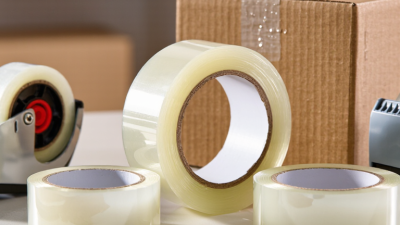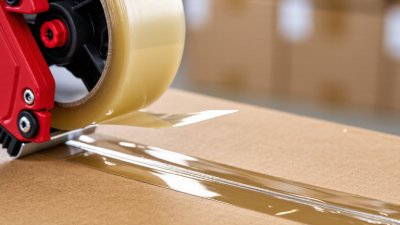
Global buyers are rethinking how they choose Clear Packing Tape in 2026. The product may look simple, but its performance depends on carton material, warehouse temperature, sealing speed, and transport conditions. A tape that works well on a dry corrugated box may fail on dusty recycled cardboard. Small differences matter.
This guide examines leading clear packing tape types for international purchasing teams, distributors, and packaging professionals. It considers acrylic, hot melt, and natural rubber adhesives, along with hand-roll, machine-grade, reinforced, and low-noise options. Practical selection includes checking adhesion, tensile strength, thickness, unwind performance, and resistance to heat or humidity. These details are more useful than attractive packaging claims.
Real testing remains essential.
In our experience, sample rolls often reveal problems that product sheets hide. A tape may seal firmly at room temperature but lift after overnight storage in a cold warehouse. Another may run smoothly on a packing machine yet split during manual application. No tape is perfect. Buyers should compare samples on their own cartons, using realistic box weights and sealing methods.
Reliable sourcing also requires clear technical documentation, consistent roll dimensions, traceable batches, and responsible supplier communication. Certifications can support confidence, but they should be verified rather than assumed. This article highlights useful options for different shipping environments while acknowledging an important limitation: global conditions vary widely. The best choice is rarely the cheapest roll. It is the tape that performs consistently from the packing table to the customer’s delivery point.
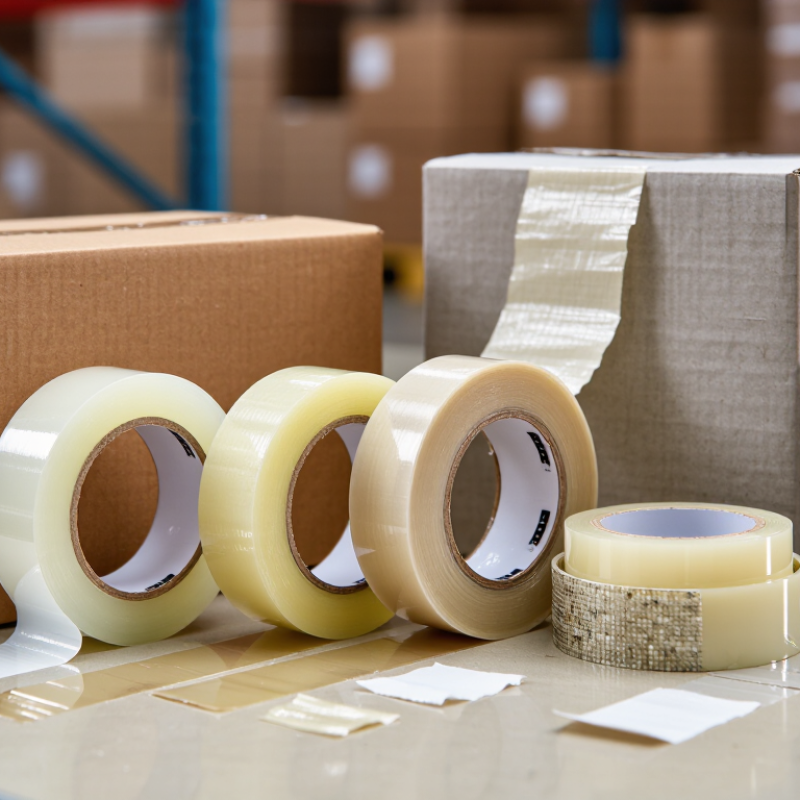
Clear packing tape is a transparent pressure-sensitive film used to seal cartons, parcels, and protective wraps. Most rolls combine a plastic backing with an adhesive layer. The backing may be polypropylene or polyester, while adhesive chemistry affects grip, aging, and removal. That distinction matters. A low-cost roll can look identical to a stronger one on a warehouse shelf.
For global buyers, tape is a small component with large operational consequences. Cartons face humidity, dust, vibration, temperature changes, and rough handling during storage and transit. Acrylic adhesive often performs steadily across changing conditions, while hot-melt adhesive can offer quick initial tack. Solvent-based systems may deliver strong bonding, but buyers should confirm safety documentation and intended use. Choose by carton weight, surface texture, sealing machine speed, and expected storage period. Test it.
In practical sourcing work, I recommend a simple trial: seal identical cartons, stack them, and inspect the seams after simulated handling. Check unwind noise, edge lifting, print visibility, and residue on recycled board. Transparency supports clean labeling and carton inspection, but it does not guarantee performance. I have seen clear tape fail on dusty corrugated surfaces despite excellent initial adhesion. Specifications also need careful review. Width, length, thickness, core size, and tensile strength must match equipment and packing routines. Buyers should request samples, batch data, and consistent inspection records before approving regular shipments. Sometimes, the cheapest roll is not the economical choice.
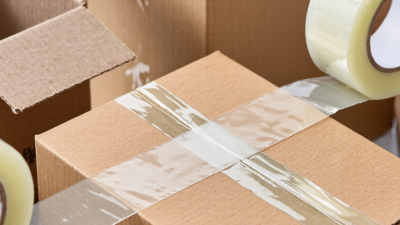
2026 Top Clear Packing Tape Types for Global Buyers
Clear packing tape is mainly classified by its film and adhesive. The film provides strength, clarity, and resistance to stretching. BOPP film is widely used for cartons because it is light, stable, and cost-efficient. PVC film feels softer and tears more easily by hand. It also offers better conformability around uneven boxes.
For heavier loads, thicker BOPP film can reduce splitting during transport. However, “thicker” does not always mean better. Poor carton surfaces can still cause failure.
Adhesive selection changes performance significantly. Hot-melt adhesive bonds quickly and suits high-volume carton sealing. Acrylic adhesive usually performs better under sunlight, aging, and temperature changes.
Solvent-based adhesive offers strong adhesion on difficult surfaces, including recycled corrugated cartons. Natural rubber adhesive grips well, but its performance may vary in heat and long storage.
In practical packaging tests, dust, humidity, and low application pressure often cause more failures than tape quality. This point is easy to overlook.
Tips: Match tape width and thickness with carton weight, not appearance. Test adhesion after 24 hours, especially on recycled boxes. Check unwind noise when worker comfort matters. For international shipments, trial the tape through heat, cold, vibration, and humidity cycles. A small sample test is useful, but it cannot represent every warehouse condition.
Clear packing tape is not a single-purpose material. Different cartons, storage conditions, and application speeds require different tape structures.
For everyday corrugated boxes, clear BOPP tape with acrylic adhesive offers clean visibility and reliable aging performance. It suits warehouse sealing, retail shipments, and parcels stored under moderate conditions. Acrylic adhesive usually improves resistance to light and temperature changes, but its initial grip may feel slower.
Hot melt clear tape works well when cartons need quick sealing on busy packing lines. It grabs the cardboard quickly and performs efficiently on regular recycled cartons. However, it may not be ideal for long outdoor exposure or very dusty surfaces. For heavier boxes, choose a reinforced clear tape with embedded fibers. It adds tensile strength and helps reduce carton splitting during lifting. The tape can look less invisible under bright light.
Low-noise tape is useful in offices, fulfillment rooms, and shared workspaces. It reduces the sharp sound created by hand dispensers. That small detail matters during long packing shifts. For cold storage, test the adhesive before purchasing in bulk. Many tapes lose tack on chilled cardboard. I have seen a strong tape fail because the box surface was damp and poorly prepared.
A practical trial should measure adhesion, unwind noise, edge lifting, and removal marks. One overlooked issue is operator comfort. A tape that seals well but stretches unevenly can slow packing and cause waste. Test real cartons, not only clean samples.
Clear packing tape is usually made from BOPP film with acrylic or hot-melt adhesive. Acrylic performs well under sunlight and temperature changes. Hot-melt tape often offers stronger initial tack and faster carton closure.
Compare strength with test data, not thickness alone. ASTM D3330 measures peel adhesion, while ASTM D3654 evaluates holding power under a fixed load. ASTM D3759 covers tensile strength and elongation. Ask suppliers for results using the same test speed, backing film, and temperature. Otherwise, two impressive numbers may not be comparable. I have seen a thick tape fail on dusty recycled cartons. Surface condition matters more than many product sheets admit.
Size also affects performance. Common widths include 48 mm and 72 mm, while lengths may range from 50 to 150 meters. Choose width according to carton seam and dispenser design. For export shipments, check humidity resistance and low-temperature adhesion. Smithers’ 2024 packaging outlook places global packaging demand above 1 trillion dollars annually, increasing pressure for consistent, efficient sealing. Quality systems should include ISO 9001 manufacturing control, batch traceability, and documented inspection. For transport validation, ISTA 3A testing can reveal failures after vibration, drops, and compression. Do not rely on one laboratory result. Repeat testing with actual cartons, especially when recycled fibers or uneven flaps are involved.
Global buyers should check performance before comparing clear packing tape prices. The United Nations Conference on Trade and Development reports that maritime transport carries over 80% of world trade by volume. Tape may face humidity, salt air, temperature changes, and long storage. A suitable roll must seal cartons through these conditions.
Ask suppliers for film thickness, adhesive type, tensile strength, peel adhesion, and holding power. ASTM D3330 supports peel-adhesion testing, while ASTM D3654 evaluates holding power. These figures need test conditions, not isolated numbers. A 45-micron tape can work well on clean corrugated cartons, but it may fail on dusty or recycled surfaces. In factory sourcing, carton compatibility is often checked too late. That is an expensive lesson. The World Bank’s 2023 Logistics Performance Index surveyed logistics professionals across 139 countries. Its focus on reliability and shipment quality supports a practical sourcing rule: test tape under the buyer’s real distribution route.
Tips: Request samples from three production batches. Test adhesion after cold storage and humidity exposure. Measure roll length, not only roll appearance. Check core diameter, unwind noise, edge cutting, and printed specifications. Ask for a certificate of analysis and independent test records. Confirm whether “50 meters” means usable length. Some suppliers still measure generously—or not generously enough. A pilot shipment can reveal loose winding, telescoping rolls, and carton lifting after overnight storage. Temperature matters. So does dust.
| Clear Tape Type | Backing & Adhesive | Typical Thickness | Key Performance Profile | Best-Fit Applications | Main Sourcing Checks |
|---|---|---|---|---|---|
| BOPP Acrylic Carton-Sealing Tape | Oriented polypropylene film with water-based or emulsion acrylic adhesive | About 40–60 micrometres total tape thickness | Good optical clarity, strong aging resistance, stable performance under normal storage conditions, and generally good resistance to ultraviolet light | General carton sealing, e-commerce parcels, warehouse storage, and long-distance distribution | Confirm film grade, adhesive coat weight, initial tack, holding power, unwind noise, carton surface compatibility, and performance after temperature aging |
| BOPP Hot-Melt Adhesive Tape | Oriented polypropylene film with synthetic hot-melt rubber adhesive | About 40–65 micrometres total tape thickness | High initial tack, fast bonding, and good performance on many corrugated cartons; typically more sensitive to heat and long-term aging than acrylic systems | Fast automatic case sealing, high-volume fulfillment, and clean, dry corrugated boxes | Check application temperature, storage temperature, adhesive transfer, peel adhesion, shear holding power, and compatibility with recycled or dusty cartons |
| BOPP Natural-Rubber Adhesive Tape | Oriented polypropylene film with natural-rubber-based adhesive | About 45–70 micrometres total tape thickness | Very good instant grab and reliable bonding to many carton surfaces; aging, ultraviolet, and high-temperature resistance depend strongly on formulation | Difficult corrugated surfaces, recycled cartons, manual sealing, and applications requiring strong initial adhesion | Request odor, allergen, migration, aging, and temperature data; verify residue, yellowing, unwind behavior, and compliance requirements for the destination market |
| Solvent-Acrylic BOPP Tape | Oriented polypropylene film with solvent-based acrylic adhesive | About 45–70 micrometres total tape thickness | Good clarity, durable adhesion, and strong resistance to aging, moisture, and temperature variation when properly formulated | Export cartons, extended storage, humid logistics routes, and applications requiring stable long-term adhesion | Check residual solvents, odor, regulatory documentation, coating uniformity, adhesion after humidity exposure, and environmental or workplace requirements |
| PVC Clear Packing Tape | Polyvinyl chloride film with rubber or acrylic adhesive | About 45–70 micrometres total tape thickness | Quiet and smooth unwinding, good conformability, and easy hand tearing; recycling and regulatory handling can be more complex than polypropylene tape | Manual packing, gift and presentation packaging, light-to-medium carton sealing, and low-noise workstations | Confirm plasticizer status, restricted-substance compliance, chlorine-containing material requirements, tearability, tensile strength, and disposal instructions |
| Reinforced Clear Filament Tape | Clear polypropylene film reinforced with glass-fibre strands and pressure-sensitive adhesive | Commonly about 100–150 micrometres total tape thickness | High tensile strength and strong resistance to box bursting; reinforcement improves load support but reduces simple tearability | Heavy cartons, pallet stabilization, strapping support, bundling, and high-value or irregular loads | Verify fibre count and direction, tensile strength, elongation, shear adhesion, edge lifting, dispenser compatibility, and safe cutting procedures |
| Low-Noise Clear Carton Tape | Usually BOPP film with a modified acrylic or low-noise adhesive system | About 45–60 micrometres total tape thickness | Reduced unwind sound compared with standard carton tape while maintaining clear appearance and ordinary carton-sealing performance | Retail back rooms, offices, libraries, fulfillment centers, and noise-sensitive packing areas | Request measured unwind-noise data, unwind force, machine speed limits, tack, adhesion to recycled cartons, and roll telescoping results |
| Water-Activated Clear Paper-Reinforced Tape | Kraft paper or paper-based carrier with water-activated starch or dextrin adhesive; transparent appearance is limited compared with plastic film tape | Commonly about 90–150 micrometres, depending on reinforcement | Forms a strong bond with corrugated fibres, can improve package tamper evidence, and is usually easier to separate from fibre-based recycling streams than plastic tape | Sustainable packaging programs, carton sealing where fibre compatibility is prioritized, and tamper-evident shipping | Check dispenser water control, activation speed, wet tack, carton fibre tear, humidity resistance, reinforcement, and local recycling requirements |