Leave Your Message

China Top 10 Duct Tape Manufacturers for Global Buyers

Choosing the right Duct Tape manufacturer can shape product quality, delivery stability, and long-term purchasing costs. Global buyers need more than attractive catalog photos. They need reliable factories, consistent adhesive performance, accurate specifications, and responsive communication.

This guide introduces China’s top 10 Duct Tape manufacturers for international procurement teams. The selection considers manufacturing experience, production capacity, export performance, quality systems, customization options, and customer support. We also examine practical details, including roll length, backing material, tensile strength, temperature resistance, carton protection, and private-label services. These factors matter when tape must seal cartons in humid warehouses, repair equipment, or perform under demanding transport conditions.

Real purchasing decisions are rarely simple. A large factory may offer strong capacity but less flexibility for small orders. A smaller supplier may provide faster customization but limited production redundancy. Not every manufacturer fits every buyer. That is worth remembering.

The information is intended to support careful supplier screening, not replace direct verification. Buyers should request samples, review technical data sheets, confirm certifications, and inspect packaging before placing substantial orders. Factory audits and clear quality agreements can also reduce misunderstandings. Prices may change with raw material costs, order volume, printing requirements, and shipping terms. Even experienced buyers can miss small details, such as core size or carton labeling. This overview therefore combines industry knowledge with a practical, cautious approach. It highlights manufacturers that appear suitable for different sourcing goals, while recognizing that supplier performance should be tested over time.
China Top 10 Duct Tape Manufacturers for Global Buyers

Duct Tape Manufacturing in China: Industry Scope and Product Types

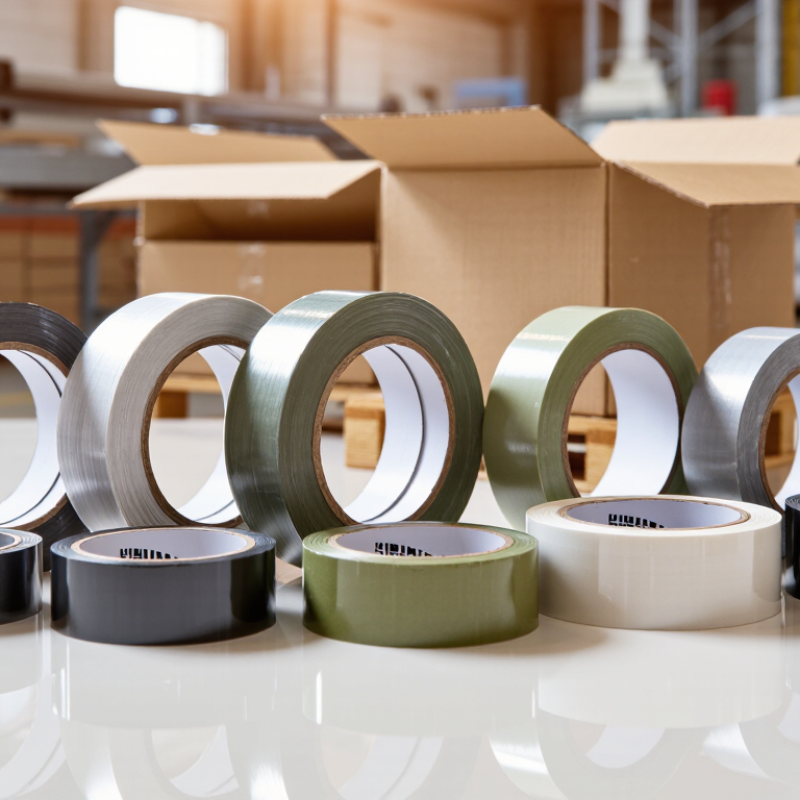
China’s duct tape manufacturing industry serves construction, maintenance, packaging, electrical work, and industrial assembly. Factories commonly produce polyethylene-coated cloth tape, PVC tape, cotton mesh tape, and synthetic scrim tape. Each structure changes strength, flexibility, water resistance, and tear behavior.

Production often includes fabric weaving, adhesive coating, lamination, slitting, rewinding, printing, and custom packing. Hot-melt adhesives support efficient production and general-purpose use. Solvent-based or acrylic adhesives may offer better aging and temperature performance. Heavy-duty tapes usually use denser scrim and thicker backing. Some suppliers also make waterproof, low-residue, colored, and flame-retardant varieties.

Specifications need careful checking. A roll may look strong but fail on dusty concrete. Adhesion can also change sharply in cold warehouses. Experienced buyers should request batch samples and review tensile strength, elongation, peel adhesion, holding power, temperature range, and residue after removal. Factory audits can confirm coating consistency and clean slitting. Packaging details matter too, especially core size, roll length, carton strength, and moisture protection.

No single tape fits every job. That is easy to forget. Product data may be accurate, yet field results still depend on surface condition and application pressure. Reliable sourcing requires clear test methods, traceable batches, and honest discussion of performance limits.
How to Evaluate China’s Top Duct Tape Manufacturers

How to Evaluate China’s Top Duct Tape Manufacturers

Global buyers should evaluate factories through evidence, not catalog claims. Grand View Research valued the global adhesive tapes market at USD 85.57 billion in 2023, with continued growth expected through 2030. Fortune Business Insights reported a different 2023 value because its market scope differs. This gap matters. Ask each Chinese manufacturer to define its product category, target markets, and calculation method.

Request recent test reports for tensile strength, peel adhesion, elongation, and temperature resistance. ASTM D3330 supports peel-adhesion testing, while ASTM D3759 covers tensile performance. ISO 29862 can help verify adhesive tape properties. Check whether an independent laboratory issued the report.

Factory visits should include coating lines, curing areas, and roll-slitting stations. Look for clean edges, stable winding, and batch labels on finished cartons.

Production consistency is often more important than one impressive sample.

Order samples from separate batches. Test them after storage in heat, humidity, and cold conditions. A reliable supplier should explain adhesive formulation, backing thickness, carton protection, and quality controls without hiding behind vague language.

Ask for defect rates and corrective-action records. Some suppliers may provide polished documents but weak process control. That is an uncomfortable point.

I would also compare lead times against actual shipping records, not promises. Price deserves attention, but unusually low pricing may reflect thinner backing, weaker adhesive, or fewer inspections.

Profiles of Ten Leading Chinese Duct Tape Manufacturers

China’s duct tape sector serves construction, packaging, maintenance, and industrial assembly. This profile reviews ten leading Chinese manufacturers through production focus, export readiness, and quality controls. The companies represent different strengths, including heavy-duty cloth tape, waterproof sealing tape, printed packaging tape, and custom adhesive solutions.

Industry reports from IMARC Group estimate that the global adhesive tapes market reached tens of billions of US dollars in recent years. Their forecasts also indicate steady growth through the early 2030s. However, report definitions vary. Some include medical and electrical tapes, while others separate duct tape. That difference deserves attention. Chinese factories increasingly use automated coating lines, controlled curing rooms, and laboratory testing for peel strength, tensile strength, and aging resistance. Several manufacturers also offer samples before bulk production. This helps buyers check adhesion on concrete, polyethylene, metal, and painted surfaces. A ranking is never perfect. Production scale does not always equal consistent performance.

Tips: Ask for a recent technical data sheet and batch test report. Confirm roll length, backing thickness, adhesive type, carton packing, and storage limits. Request testing at both low and high temperatures. A tape that performs well in a warm warehouse may fail on a cold jobsite. Buyers should also inspect export packaging, pallet protection, and labeling accuracy. Intertek and ASTM testing references can improve supplier comparisons, but third-party reports should match the actual product. Small details matter.

Quality Standards, Certifications, and Production Capabilities

China Top 10 Duct Tape Manufacturers for Global Buyers

When comparing Chinese duct tape manufacturers, buyers should examine quality systems, not only catalog prices. ISO 9001 certification indicates controlled procedures, but its scope must cover the actual tape facility. Ask for recent audit records and batch traceability details. Reliable producers can identify the coating date, adhesive lot, operator, and inspection results from one carton.

Production capability also matters. Strong factories control fabric density, adhesive coating weight, lamination pressure, and roll tension. Their laboratories should test tensile strength, elongation, peel adhesion, holding power, and temperature resistance. Request test reports from recent production, not only standard samples. Certifications related to chemical safety, such as REACH or RoHS compliance, should include clear product coverage and testing dates. A certificate without a matching product description creates uncertainty.

Tips: Check a 48-hour aging sample before placing a large order. Inspect the roll edge, winding tightness, odor, and clean tearing by hand. Confirm carton drop testing and moisture protection for ocean shipping. I have found that sample performance can differ from mass production. That is easy to overlook. Require a signed specification sheet, an approved pre-production sample, and random third-party inspection when the order is critical. Also review monthly capacity, backup coating lines, and power-loss procedures. A modern machine helps, but disciplined operators still decide consistency.

China Top 10 Duct Tape Manufacturers for Global Buyers

Quality Standards, Certifications, and Production Capabilities

This anonymized benchmark summarizes common export-ready capabilities in China’s duct tape manufacturing sector. The index combines quality-system maturity, regulatory compliance coverage, laboratory testing, customization capacity, and production scalability. It is intended as a buyer screening reference rather than company-specific performance data.

Export Services, Pricing Factors, and Buyer Selection Criteria

Global buyers evaluating China’s top ten duct tape manufacturers should inspect export support as closely as adhesive performance. A capable supplier provides commercial invoices, packing lists, certificates, and consistent carton markings. Ask whether staff can manage container loading, pallet plans, and destination-port coordination. Samples should travel through the same production route as bulk orders. That detail exposes process gaps early. Reliable factories explain lead times honestly, including holidays, inspections, and possible adhesive curing delays.

Pricing depends on backing material, adhesive formula, roll size, tensile strength, print requirements, and order volume. A low quote may exclude export packaging, testing, inland transport, or port charges. Request a line-by-line quotation with currency, Incoterms, payment stages, and validity period. Compare landed cost, not only the unit price. Buyers should also confirm minimum order quantities and whether mixed sizes are accepted. In practice, small trial orders may carry higher costs, but they reduce expensive surprises. Still, purchasing reviews often show that “cheapest” becomes costly when rework is needed.

Selection should combine factory experience, technical communication, quality records, and after-sales response. Request recent test data for adhesion, temperature resistance, unwind performance, and aging. Check whether batch numbers support traceability from raw materials to finished cartons. A video audit helps, but it cannot replace physical inspection. Visit or use an independent inspection service when order value is significant. Be cautious with perfect claims. A trustworthy manufacturer admits limits and proposes measurable corrective actions. Also, clarify replacement rules for damaged rolls, short shipments, and inconsistent coating.